Spring in the mountains - combining macro and landscape photography with a single lens.
I always seem to find myself in the mountains at that awkward time when spring has sprung down in the valleys but there is still a fair amount of snow around 2000 metres altitude. My recent hike up from Aminona, the small village near Crans-Montana that inexplicably allowed three skyscrapers to be built on the mountainside (and is now compounding the error by building a huge luxury resort next door), was no exception. While the resort may be bustling in winter, in early spring you have it largely to yourself. Having parked in the free car park that looks like something you would see in an urbex photographer’s gallery, I set off towards the Cascade de la Tièche equipped with my Nikon Z7II, tripod and 14-30mm F4 wide angle lens. As always the first few kilometres uphill were tough, and they got even tougher as I encountered the first of the remaining snow drifts. Just after the first waterfall at around 1970 metres the going got much tougher, with nothing but snow and the river visible and no discernible paths. I tried to follow the route of the path as indicated on the map but ended up veering off up the Montagne du Sex (!) just to make sure that I would get a view of the waterfall when I rounded the summit.
Luckily, as I got back down there were patches of grass and even a small welcoming committee of marmottes, who still seemed a bit dozy after their winter sleep and were happy to stand immobile as long as I did the same. As I only had my wide angle lens with me it seemed pointless risking scaring them off by getting my camera out of my rucksack, so I took some shots on the phone and got a great result.
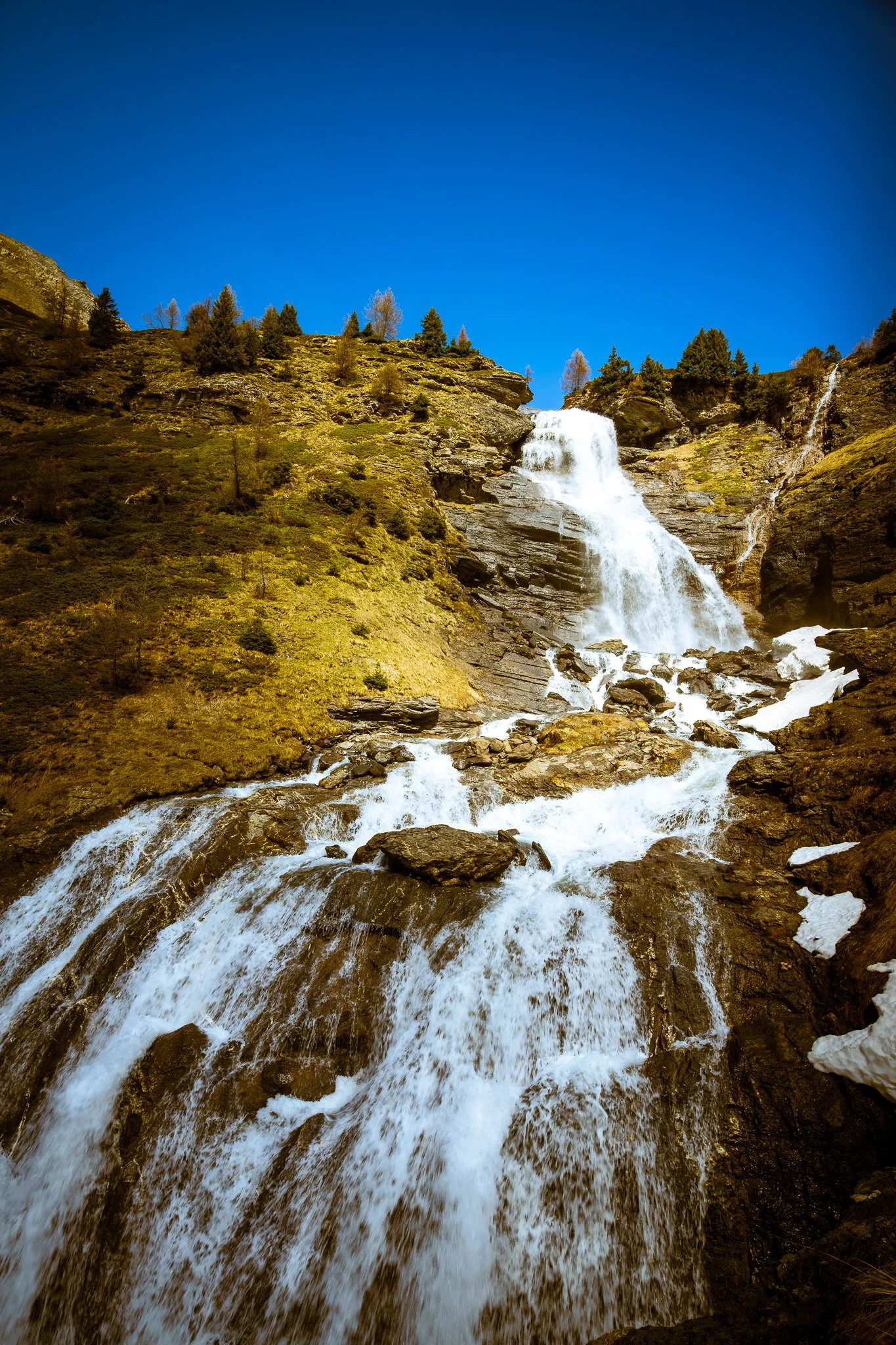
Cascade de la Tièche
I was also lucky that there were some nice shafts of sunlight reflecting off the waterfall by the time I did get the camera set up at around noon. I tried a few compositions and chose a vertical one as my favourite in the edit.
Annoyingly I had left my filters back home and only had the polarising filter screwed on, so I couldn’t get the water silky smooth. But I’m quite pleased with the final result because you get some impression of the power. The viewpoint is also good because you are looking right over the waterfall.
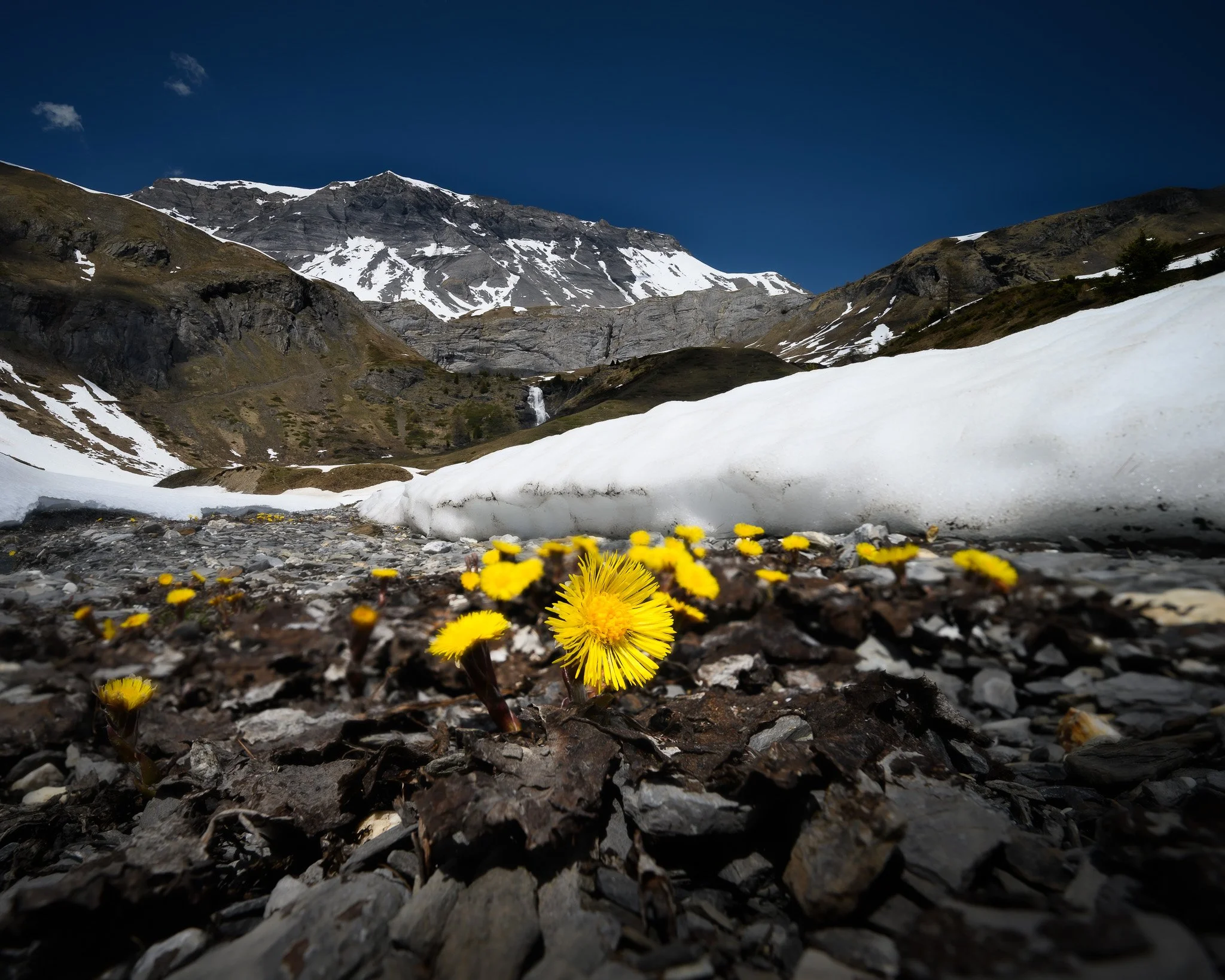
Almost as an afterthought on the way back down, realising that it was much easier to skirt the edge of the river, I stopped to try something a bit different. I found a shallow part of the river and managed to set up on a small bank in the middle of the gushing rapids to try to frame some flowers against the imposing mountain backdrop. The lowest tripod setting was still way to high so I ended up dangling my feet off the river bank and laying the camera as flat as I could on the ground (I hate focussing and framing using the screen so I will go to great lengths to be able to look through the viewfinder - and yes, I know that is also a screen).
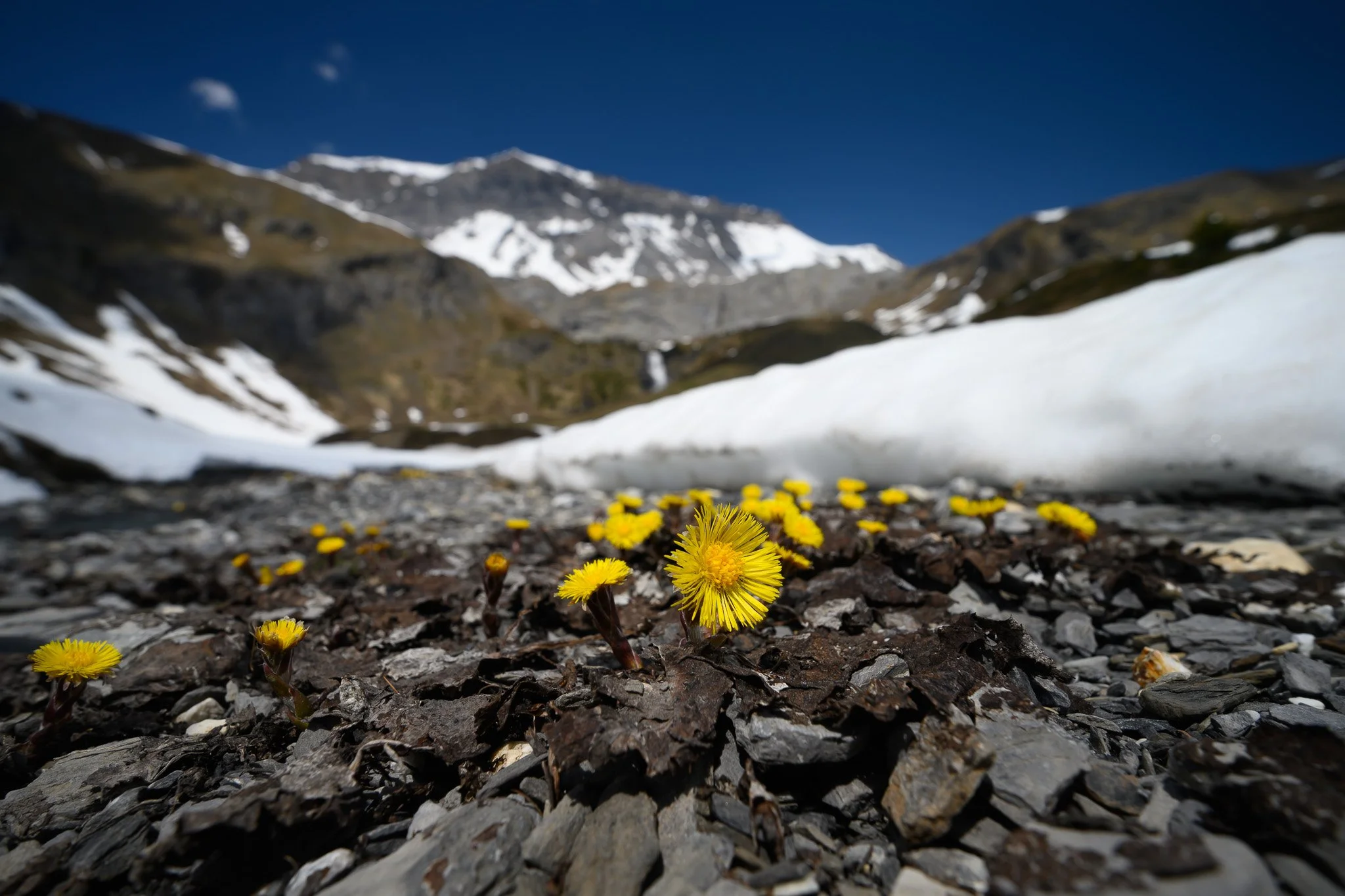
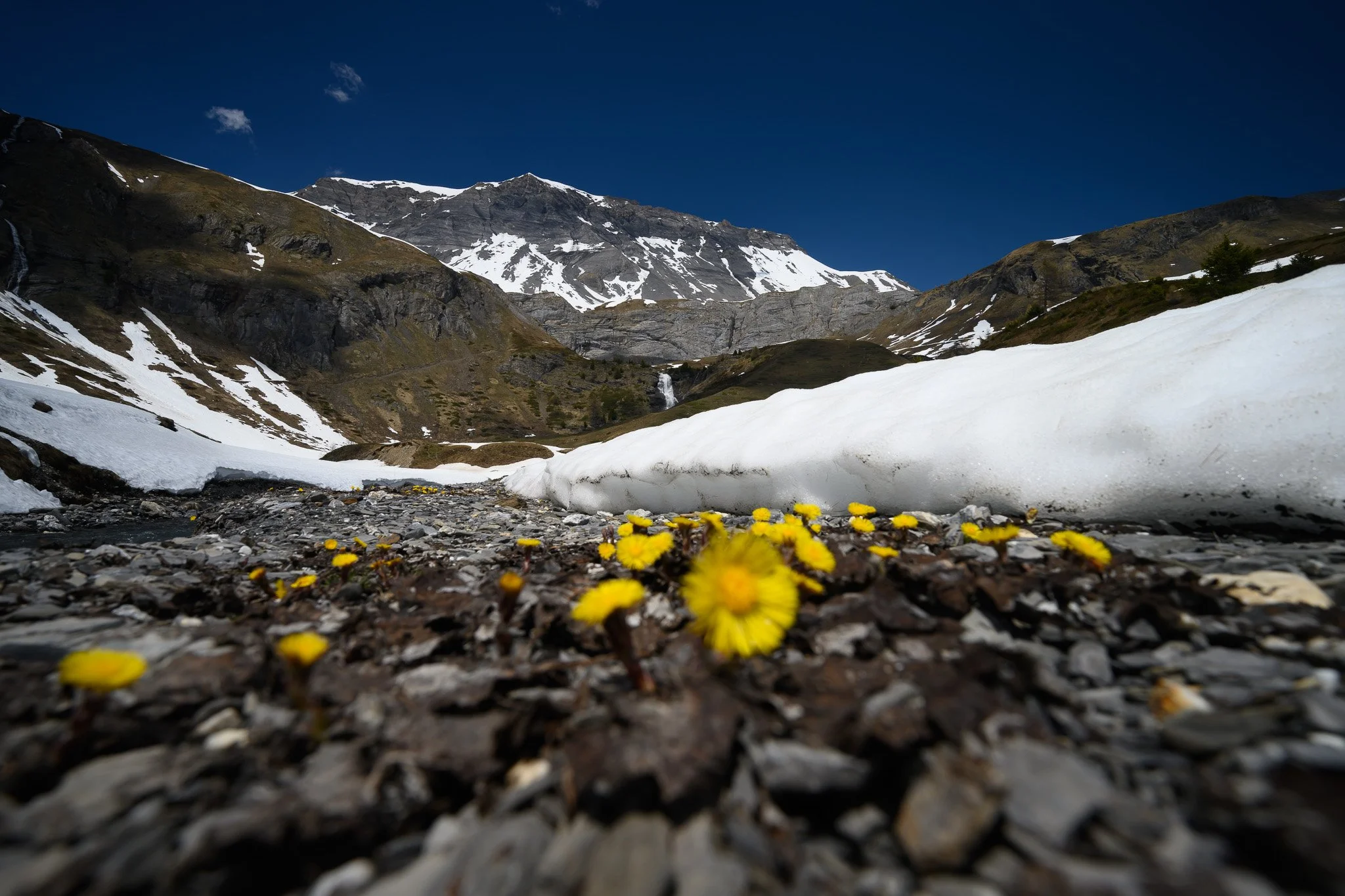
Because I only had the wide-angle lens with me I didn’t have any great hopes of success. But how I was wrong. I was really surprised at the lens’s close focusing capability and, once I had made sure that my shadow wasn’t entering the frame, shot a few frames. Not bad. I chose a solitary flower as my main subject and then shot two frames, one for the foreground and one for the background, to make sure I had everything in focus.
When I got home the auto blending feature in Photoshop wasn’t much use so I just used a layer mask to bring the flower and the area around it into focus and here is the result - an unexpected bonus from what was intended as a waterfall shoot (although you can still just make out the waterfall in the distance). I have included the foreground and background frames for comparison.