Koutoubia Mosque: Chasing the light in Marrakech
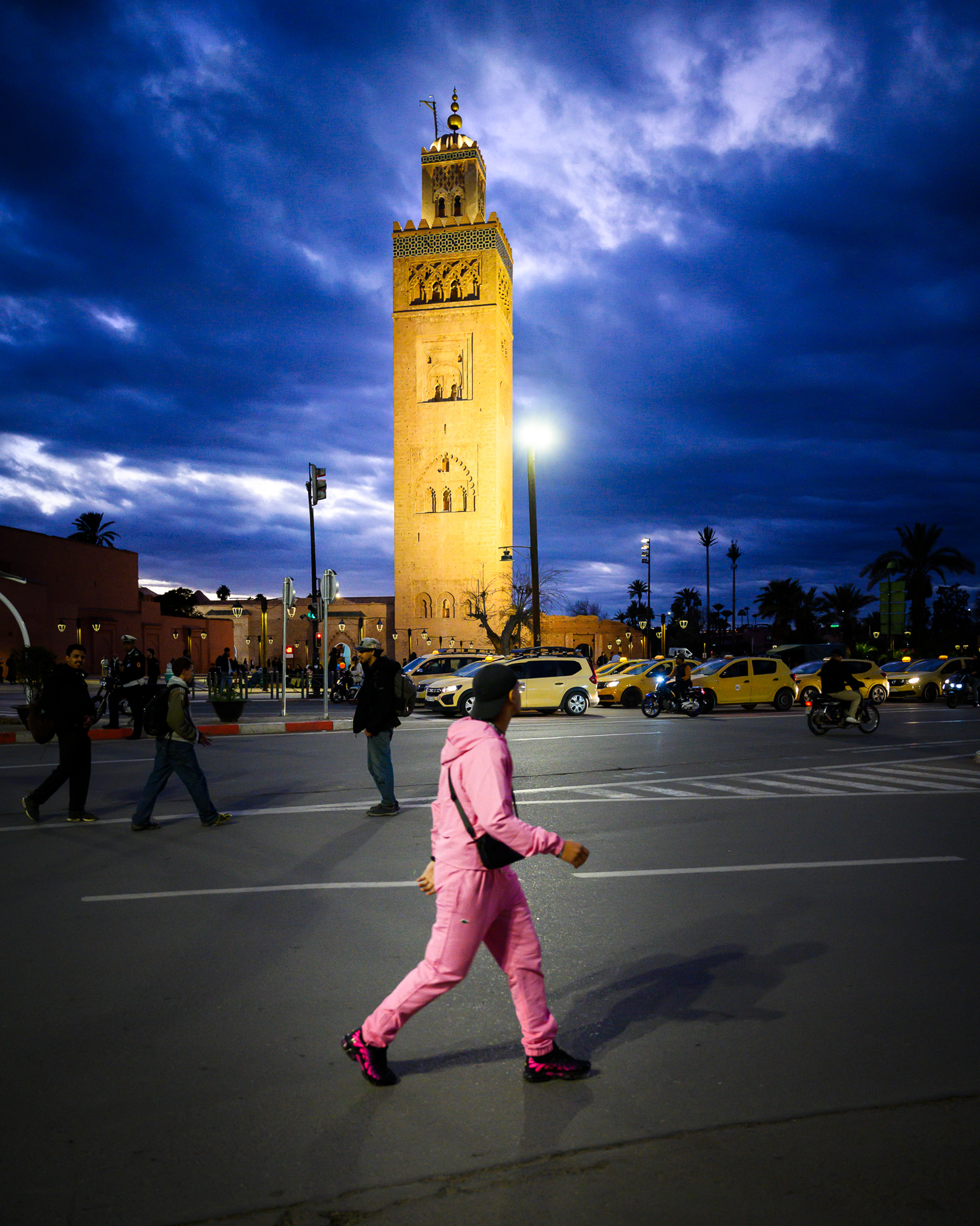
Rising 70 metres above the rooftops of Marrakech, the minaret of the Koutoubia Mosque is one of the most recognisable silhouettes in all of North Africa. Whether you're shooting at the blue hour before dawn or watching it blush in the warm amber of a desert sunset, this extraordinary structure rewards photographers who are willing to plan, wait, and return again and again.
A Brief History
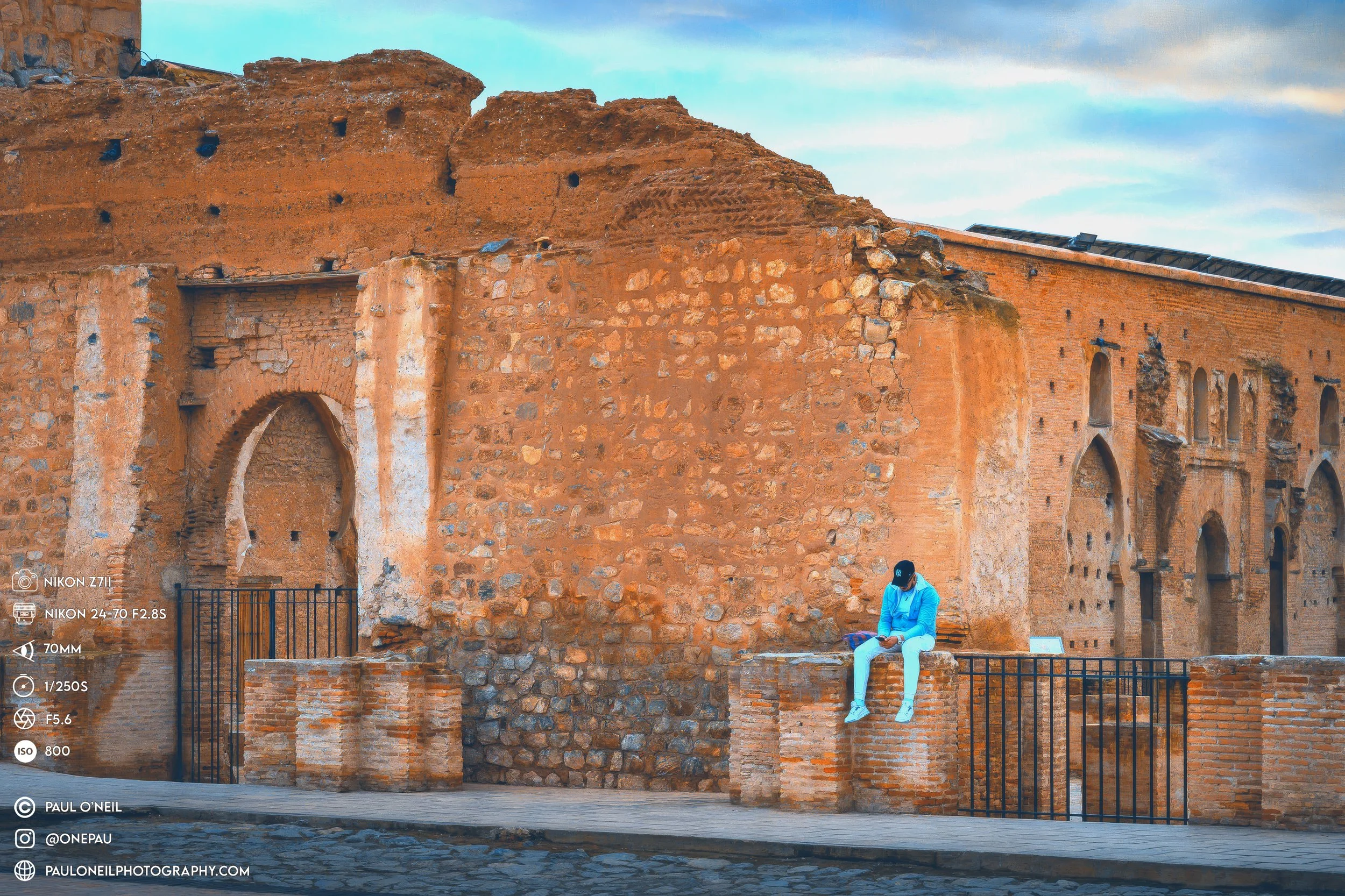
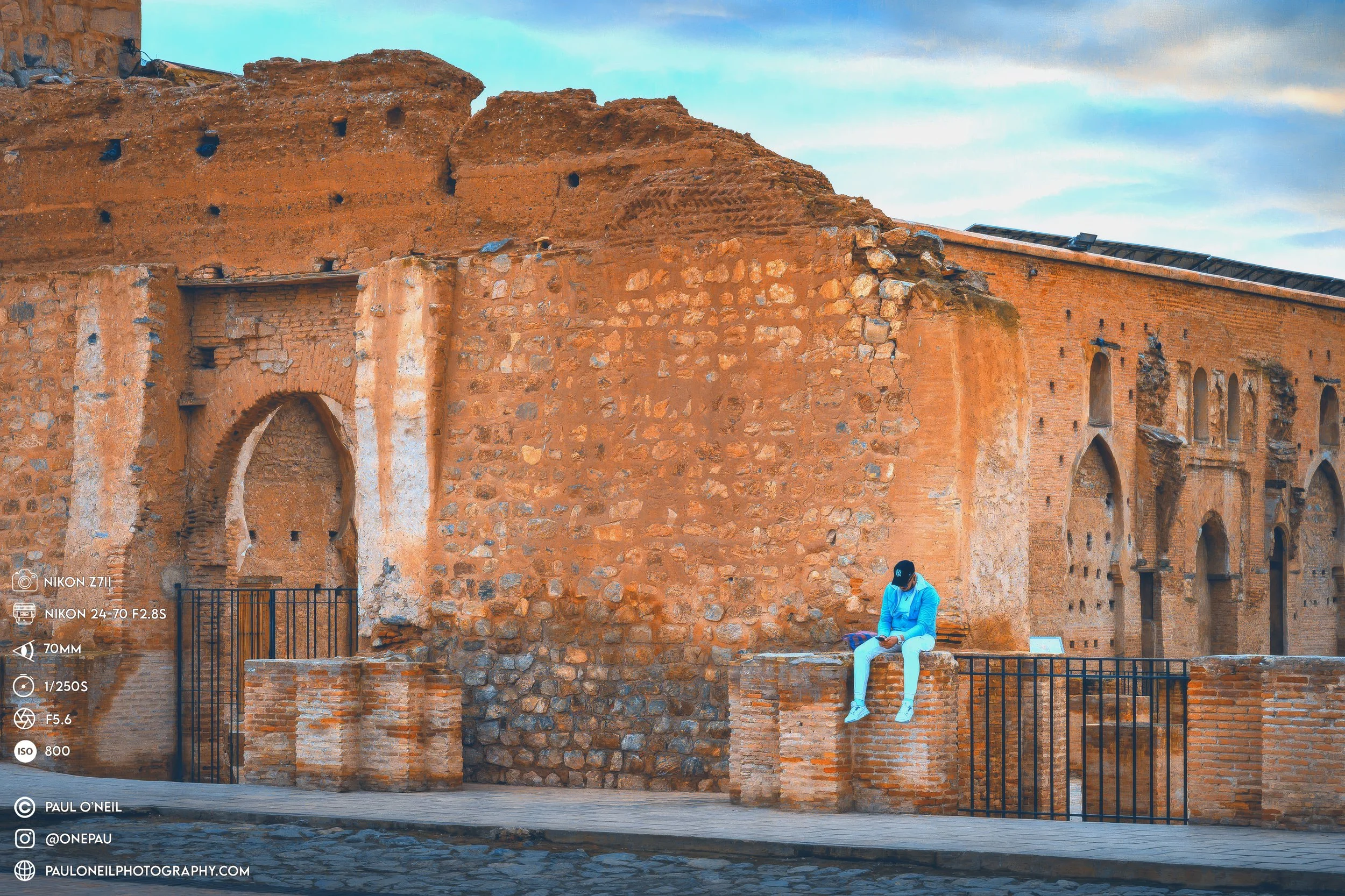
The Koutoubia was built during the Almohad dynasty in the 12th century, with its construction completed around 1158 under the reign of Sultan Abd al-Mu'min. Its name derives from the Arabic word for booksellers — kutubiyyin — a nod to the manuscript market that once thrived at its base. The mosque actually sits on the remains of an earlier, slightly misaligned mosque, sections of which are still visible beside the current structure. The minaret itself served as the architectural template for two other great towers: the Giralda in Seville and the Hassan Tower in Rabat, making it one of the most influential pieces of Islamic architecture ever constructed.
Where to Find It
The mosque sits at the south-western edge of the Djemaa el-Fna square, making it the natural anchor of Marrakech's medina. It is surrounded by a large garden of rose bushes and palm trees, which provides a generous amount of space to compose your shots — a rarity in the tightly packed streets of the old city. Non-Muslims are not permitted to enter the mosque itself, but the gardens and surrounding paths are freely accessible throughout the day.
Photography Tips
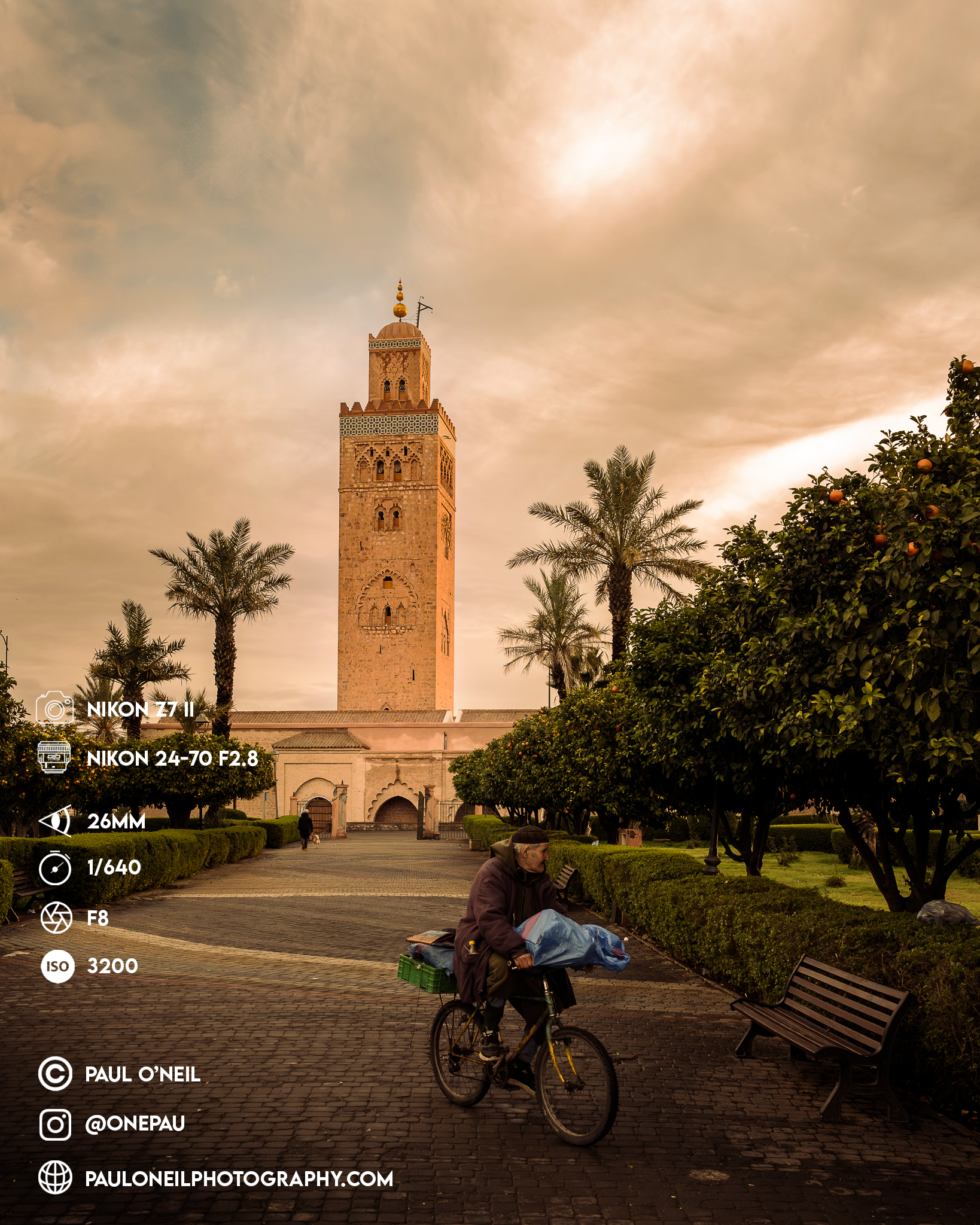
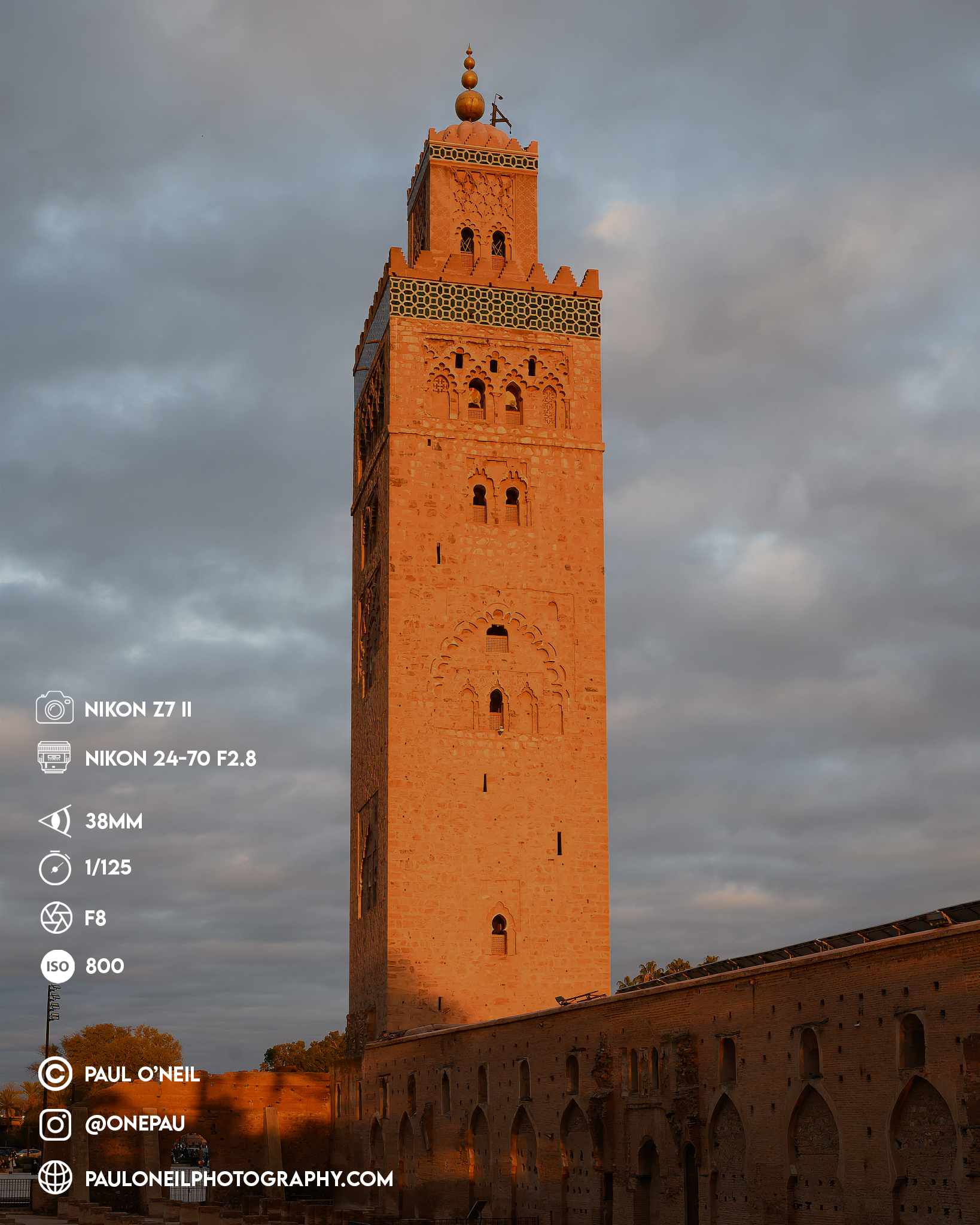
The Koutoubia is at its most dramatic during the golden and blue hours, which is precisely why I've structured this series around those transitional moments of light. At sunrise, the eastern light grazes the ornate stonework of the minaret and picks out the decorative sebka lattice in extraordinary detail — a long lens in the 200–300mm range will isolate these upper sections beautifully. By contrast, sunset throws the minaret into warm silhouette against a deepening sky, ideal for wide compositions that include the palms below.
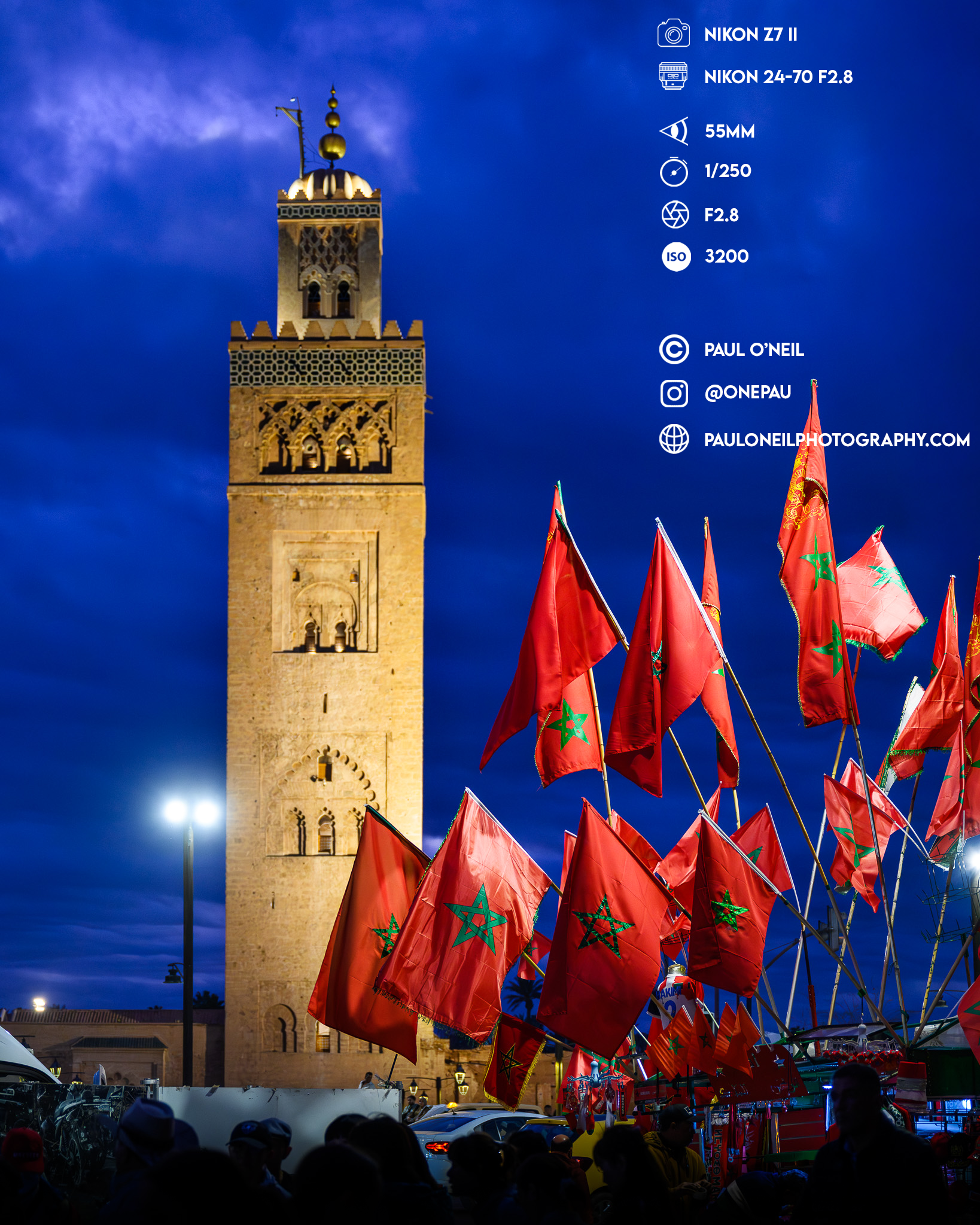
For night shots, the mosque is tastefully floodlit, giving you a clean, evenly lit subject to work with. A sturdy tripod is essential here. Shoot from the northern end of the gardens to include the reflecting pool in your foreground for a natural mirror effect when conditions are still.
Suggested settings to experiment with:
At golden hour, try ISO 100–200, f/8 for sharpness across the full height of the minaret, and adjust your shutter speed to expose for the sky. In low light and at night, drop to ISO 400–800 and lengthen your exposure — anywhere from 2 to 15 seconds depending on your desired sky effect. A remote shutter release will keep things crisp.
Come prepared to stay a while. The Koutoubia is not a single-shot subject — it is a study in patience, and the light will always surprise you.