Tbilisi: A photographer's guide to Georgia's extraordinary capital
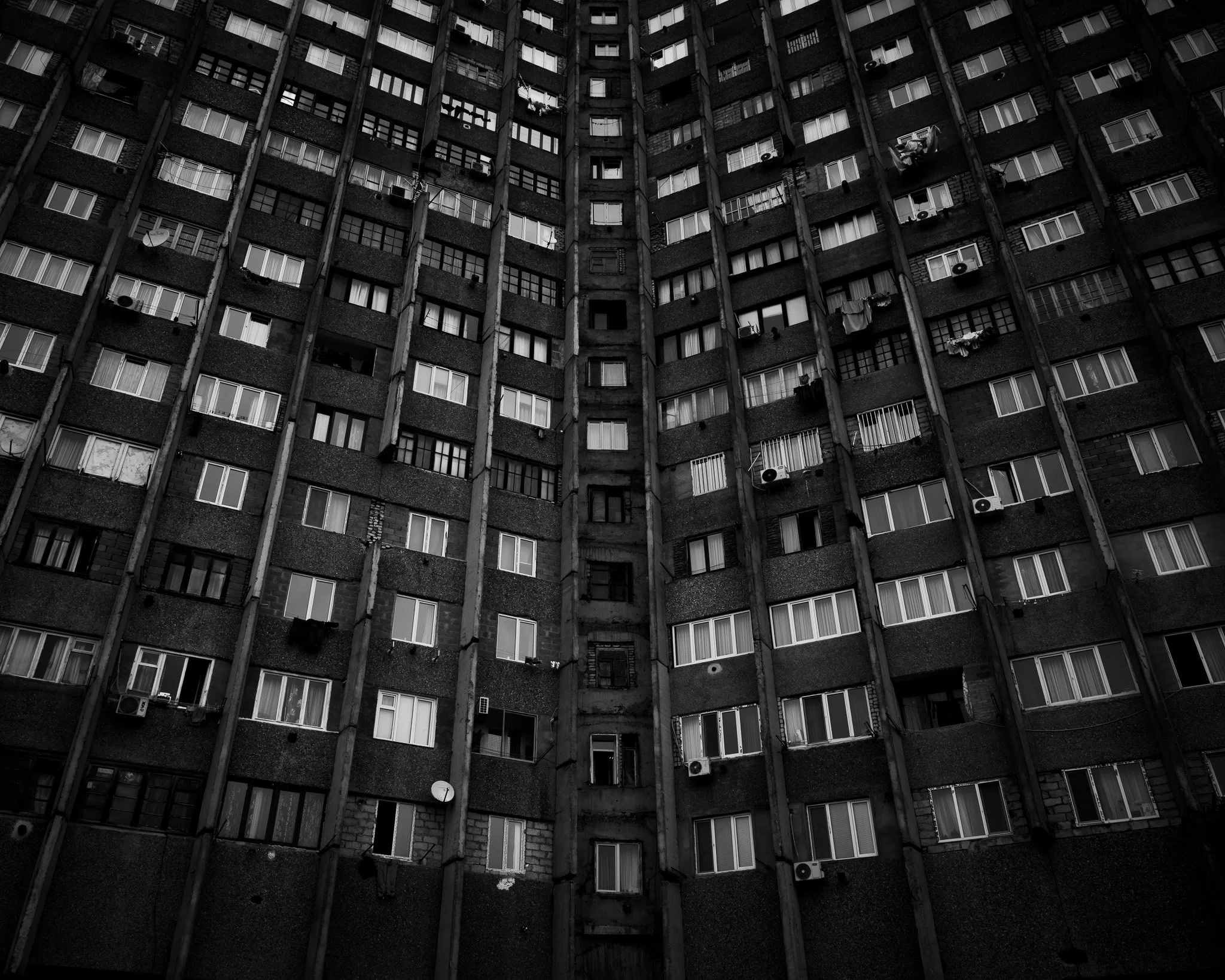
If you’re looking for a city that’s off the beaten track and which has its own places that are off the beaten track, then Tbilisi is the place for you. Soviet brutalism is still visible alongside medieval fortress walls, crumbling balconied houses sit next to a glass-and-steel towers and bridges and — if you are ready and willing to seek them out — people go about their business without a care in the world for the photographer who can blend in.
I visited Tbilisi in March 2026 — four full shooting days in a city I'd been wanting to visit ever since Easyjet started offering a direct flight from Geneva. This is my overall guide to the trip: the logistics, the structure of my shooting days and the honest assessment of what works and what doesn't. Separate articles will cover specific subjects in more detail: the Soviet and brutalist architecture tour, the early morning market shoots and the golden hour and nightscape opportunities around the city's more familiar landmarks.
Getting there
The four-hour flight from Geneva to Tbilisi is one of Easyjet’s longest but it went without a hitch. An early morning departure from Geneva gets you to Tbilisi airport in the early afternoon, leaving you time to catch the golden hour on your first day.
Getting to and around the city
There is no Uber in Tbilisi but there is Bolt, which is more or less the same apart from not being able to tip your driver. This was a big shame as I really felt for the guy who was stuck in traffic for over an hour for a journey that should normally take less than half that. As he explained to me via Google Translate, the patriarch of the country’s orthodox church had died and many of the main roads in the heart of the city were closed, causing gridlock — an inconvenience that would affect the rest of my stay.
The death of Ilya II was a big deal. He had led the church since 1977 and thus essentially steered this very religious nation through a fair amount of upheaval, through Soviet times, civil wars and on to a kind of independence (20% of Georgia’s territory is still occupied by Russia). It was not surprising, therefore, that so many people wanted to pay their respects. I did venture as far as the back of the queue of people waiting to file through the Holy Trinity Cathedral to gauge the level of “interest” and I was surprised by the sheer variety of religious costumes on display from people who had travelled in from all over the country.
The metro is genuinely useful for reaching locations in the outer residential districts that would otherwise require a significant Bolt fare. A single top-up card costs 2 GEL at any station and journeys cost 1 GEL each (so you have to pay at least 3 GEL but that single journey can last up to 90 minutes), making it one of the cheapest metro systems in Europe or Asia. Over the weekend I was there, the metro was free of charge to allow mourners to pay their respects. For early morning shoots — when you need to be somewhere at 06:30 and the light won't wait — Bolt is the better option. Even with the major traffic disruptions, drivers were quick to call or WhatsApp me to explain the traffic situation.
Where I stayed
I booked the flight and the hotel months in advance. Unfortunately, the hotel (The “one family boutique” hotel - it doesn’t have a website but you can find it on Booking.com) contacted me less than 24 hours before my arrival to inform me that it was still undergoing maintenance and that they recommended I cancel and book elsewhere. I think this was a blessing in disguise as my alternative accommodation at the Glarros Old Town put me right in the heart of the old town, with many interesting sites (photographic and tourist) accessible on foot. It cost twice my original booking, but the main thing was that they had a room available at the last minute and, at 200 Swiss francs for four nights, was totally reasonable given the high-quality room.
The light in March
This is worth addressing upfront, because it shapes everything. Mid-March in Tbilisi sits just before the equinox, which in practical terms means civil twilight begins around 06:55, sunrise at approximately 07:30–07:35, and the morning golden hour runs until about 08:30. In the evenings, golden hour begins around 18:50, with sunset at roughly 19:40 and blue hour extending to about 20:10. The city is on UTC+4, so adjust accordingly when planning from home.
What this means for a four-day trip is that your productive shooting window runs from roughly 06:45 in the morning to 20:15 in the evening — and the very best light bookends the day. Structure your days around this and you'll come home with far stronger work than if you treat it like a standard city break.
The shape of the trip
Over four days I organised my time around a simple principle: the early hours belong to the streets and markets, the middle of the day to walking, exploring and the paid tours, and the late afternoon to positioning myself for golden hour. Night shooting, where conditions and energy allowed, extended the day further.
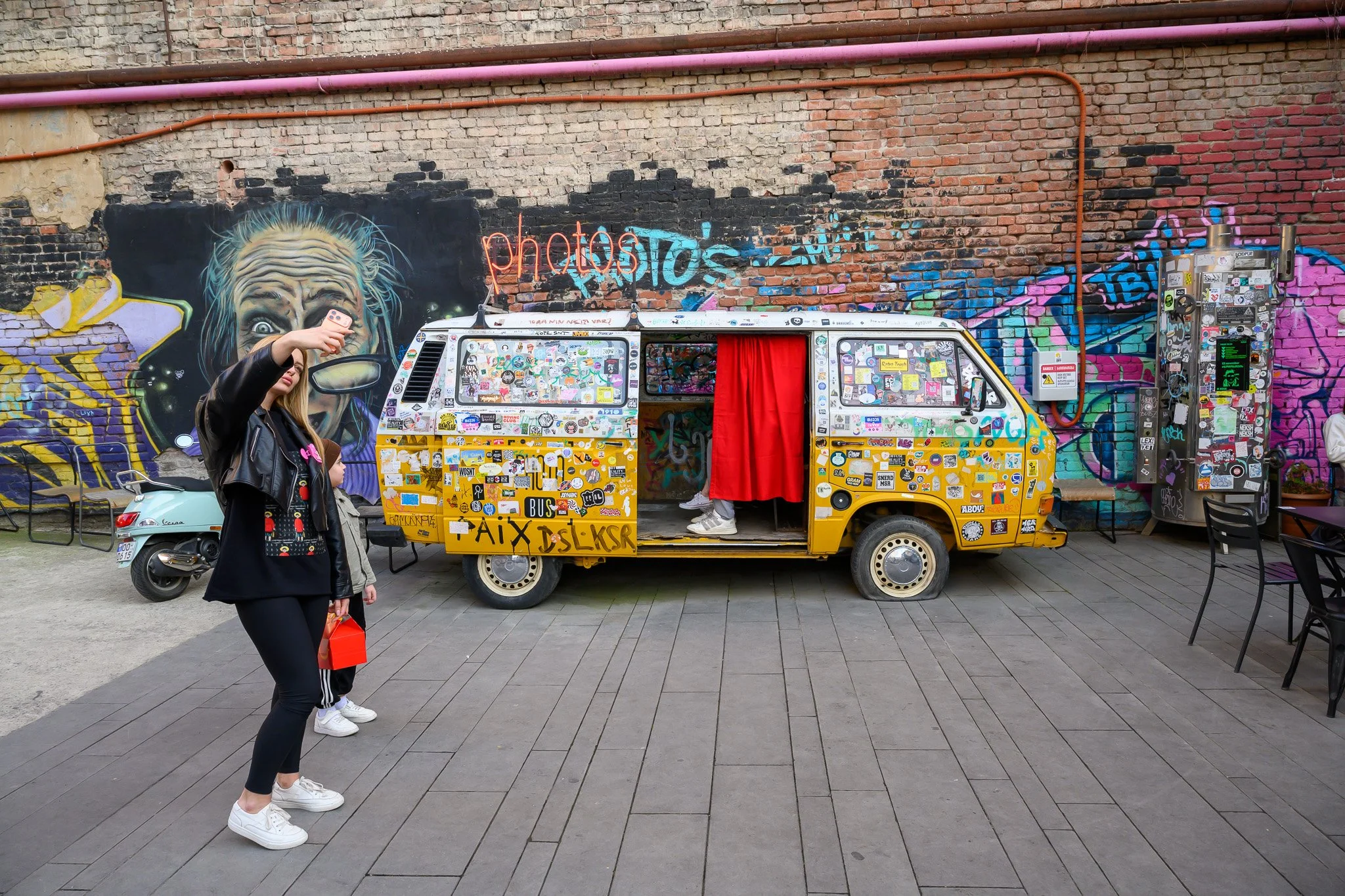
Day one was an arrival day with an afternoon and evening shoot, taking in the Chugureti district and its mixture of urban decay and street art, then the streets around Tbilisi Central Station before heading to the Metekhi cliff for sunset.
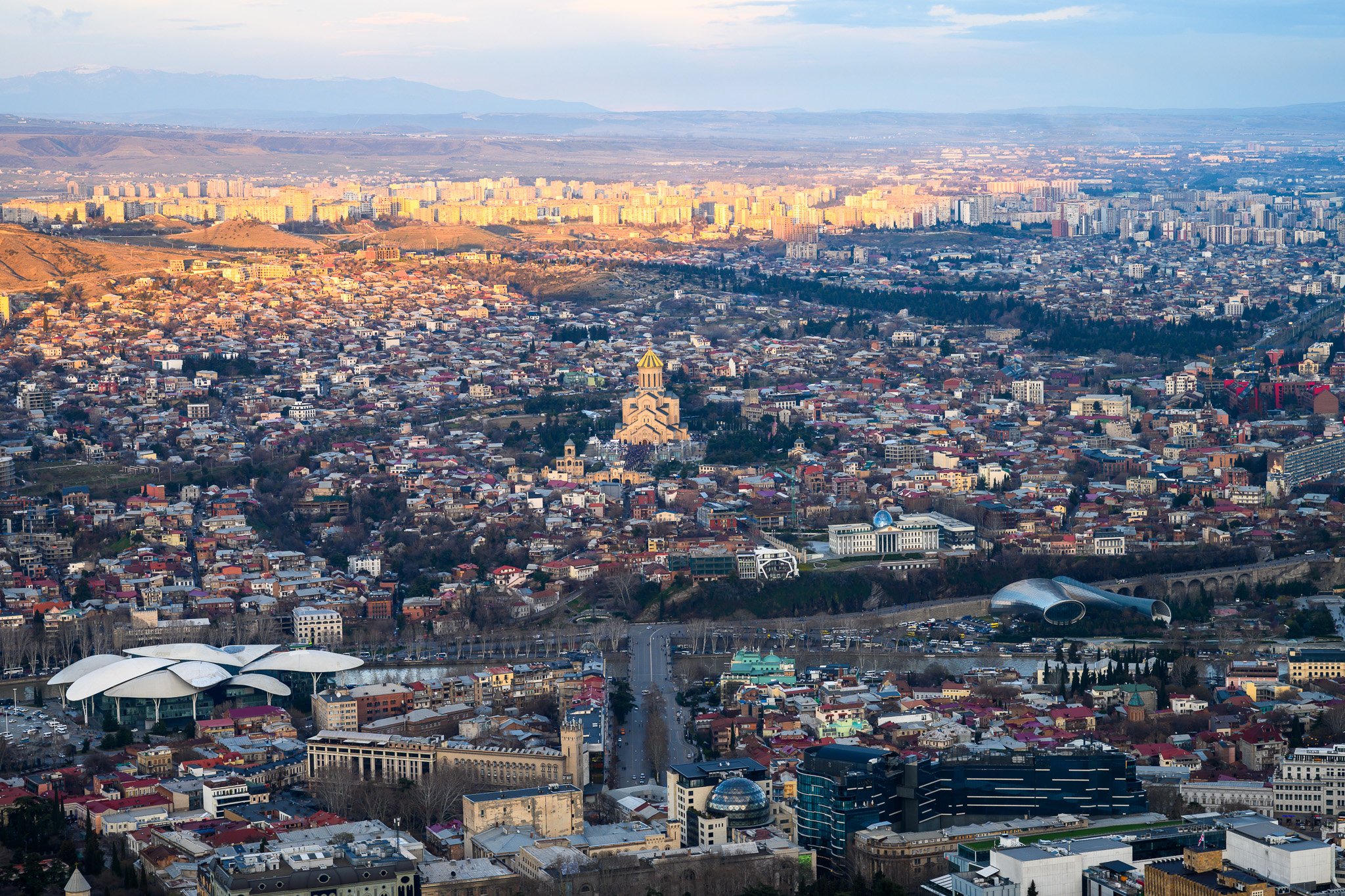
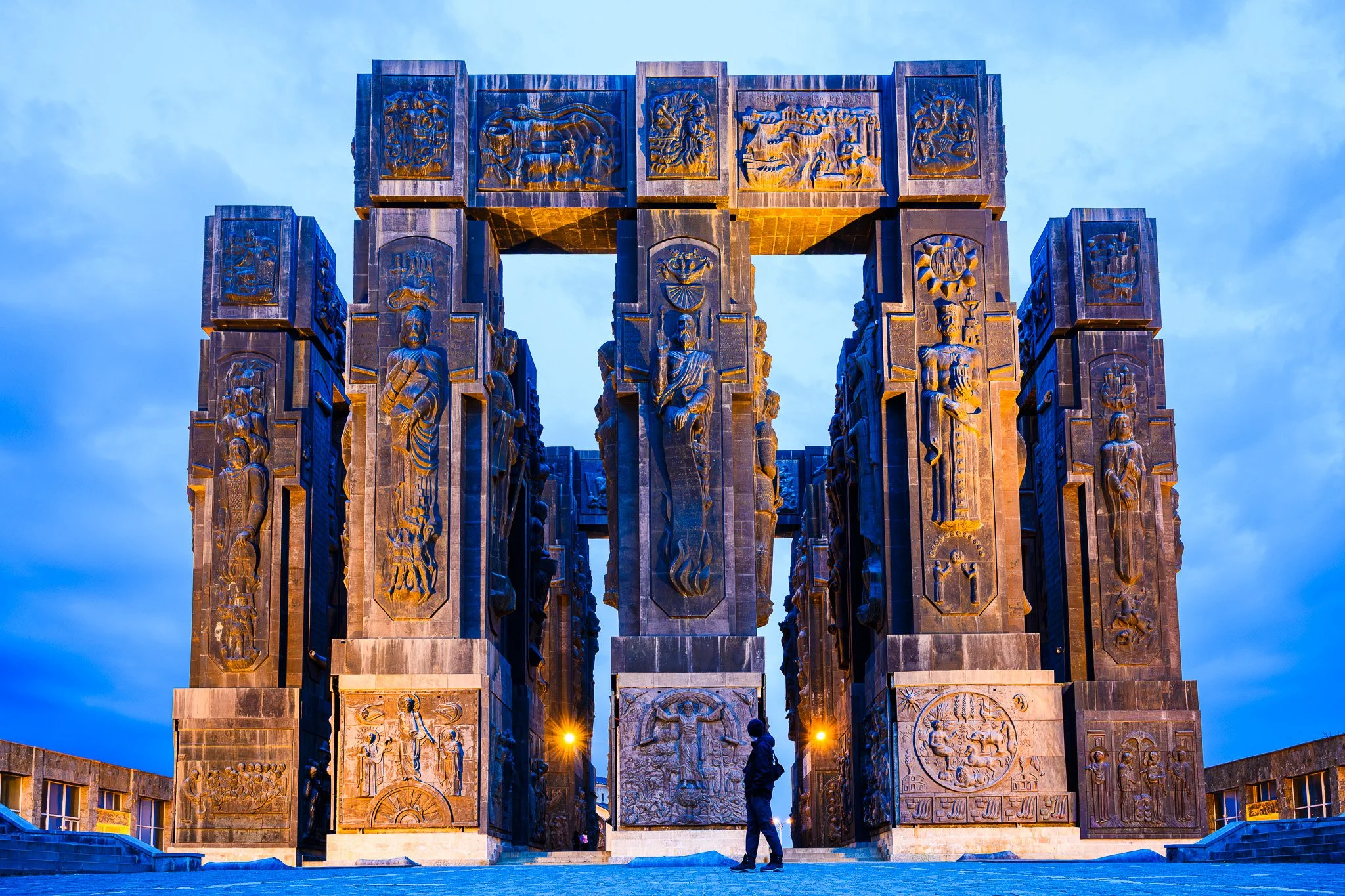
Day two involved a stroll around the old town, another quick peek into Chugureti and then a cable car ride up the Narikala cable car for a city view, followed by a walk back down through the old town. Although I knew I would be visiting it on the paid tour, I got a Bolt out to the Chronicles of Georgia for some golden and blue hour shots.
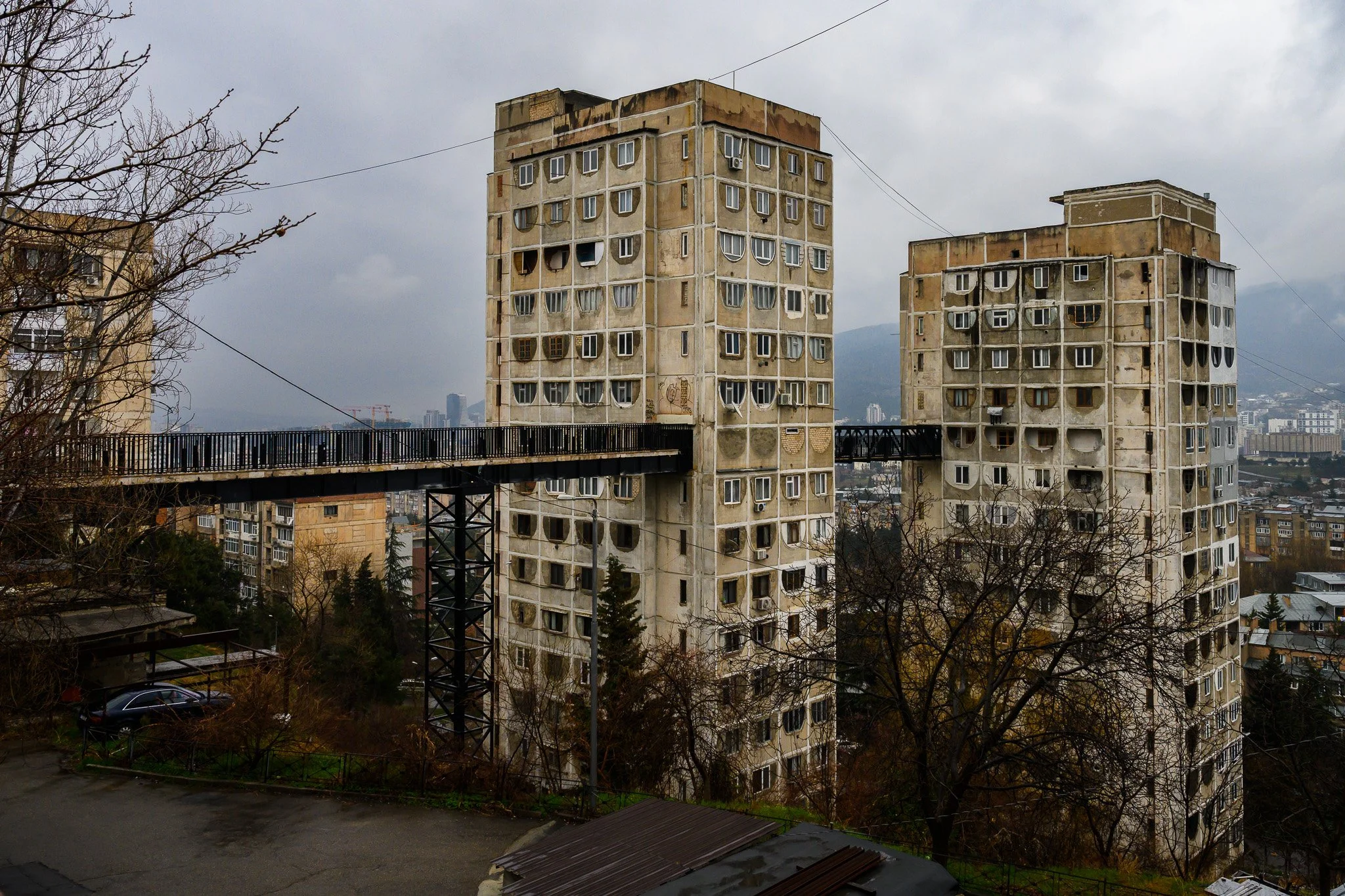
Day three was taken up mainly by the Urbex and Soviet Tour of Tbilisi, which I booked on GetYourGuide. This is a group tour but since I was the only person who booked it on that day I got the bonus of being picked up at my hotel. My guide was in no rush and gave me a running commentary throughout the five-hour trip. He was clearly used to taking photographers around and showed me some great urbex sites and even knew some handy photography tips (for example, which flagstone marks the exact centre of the Chronicles of Georgia and the convex mirror you can shoot into to get a reflection of the entire Nutsubidze skybridge complex). I thoroughly recommend this tour. I also found an Urbex Tour offered by Camp Caucasus but they never replied to my email enquiry.
Day four started with an early-morning metro ride to the Didube bus station, where the promise of hustle and bustle as people waited to board intercity buses proved to be a disappointment. Moving quickly on to the Dezerter Bazaar. Here too, expectations surpassed reality: while the market stallholders were active and men with carts were busy ferrying goods around, there was little in the way of customers. On the way back to the hotel I stopped by the sulphur baths that gave the city its name (Tbilisi literally means “hot water”). After checking out the queue of mourners I took another cable car, this one to the Mtastsminda Park for some golden hour views across the city.
Day five was a gentle final morning along the river before the midday departure.
Practical notes
Camera gear: A fast prime — f/1.8 or faster — is essential for the metro stations and interior urbex work but you may miss a zoom and/or a wide angle. I only travelled with hand luggage so I took my 50mm f/1.8 for the street photography and my 24-70mm zoom. I did miss having my 14-30mm wide angle lens with me — especially at the Chronicles of Georgia and the Skybridge, where even 24mm was not enough to get everything in the frame. I took a mini tripod with me that was useful to get a sweeping view of the city during golden hour from the Mtatsminda view point.
Language: Georgian uses its own unique script and is not related to any Western European language, but English is widely spoken in central Tbilisi, particularly among younger people. A few words of Georgian go a long way in less central neighbourhoods — gmadlobt (thank you) and bodishi (excuse me/sorry) will serve you well.
Street photography etiquette: Georgians are hospitable and generally relaxed about being photographed. Asking with a gesture and a smile almost always gets a positive response. In markets and bus stations, stay alert and keep your gear close, not out of any particular danger but out of basic common sense.
Weather in March: Expect temperatures between 8–15°C, occasional rain, and bright spells. A light waterproof layer is sensible. The unpredictable cloud cover can actually work in your favour, producing dramatic skies over the brutalist architecture and softening the midday light in the backstreets. Conditions during my stay ranged from a sunny day in the high teens to drizzle and overcast skies.
Food: You have to try the Kinkhali, the typical Georgian dumplings that come with a variety of savoury and sweet fillings. Be aware that the minimum order is five pieces of each flavour and they are quite stodgy. This is more than enough if you are on your own. Khachapuri is an eye-shaped pizza-like concoction filled with cheese and served with an egg cracked into the centre. The crispy dough is as good as that on any pizza. The best meal I had by far was at Saxlis Gemo — a tiny place with no more than 12 covers where you can peek into the kitchen and the food looks and tastes genuinely home made. I had the Ojakhuri which was generously served and came out on a sizzling plate. Coupled with some local Georgian wine it was delicious.
Is Tbilisi worth it for a photography trip?
Unreservedly, yes. It is one of the most visually diverse cities I have visited: the Soviet-era residential districts and the medieval old town, the gritty bus terminals and modern bars, the mosaic-clad metro stations, the brutalist towers linked by aerial walkways and the organic forms of glass bridges and concert halls. All of it is within reach of a photographer willing to get up early, do the research and resist the pull of the obvious shot.
The separate articles below explore the specific subjects in detail. Start there, and build your own version of this trip around the light.
Related articles:— Soviet Tbilisi: Inside the city's brutalist architecture tour— Early mornings in Tbilisi: Markets, bus stations and honest expectations— Golden hour and beyond: Modern Tbilisi and the classic shots
