Photographing the Harvest Moon
Planning is everything when shooting the harvest moon. Ideally, you need to catch it as it is rising and if you can get it rising behind something interesting, so much the better. I’ve tried a few times and been unsuccessful for two main reasons:
Not getting the exact location of moonrise right. I was in the right place for my composition but the moon wasn’t. Even using an app like Photopills you need to make sure that your phone is calibrated to get the night AR view right (make sure you also set the closest focal length in the app to the one you have on your camera!).
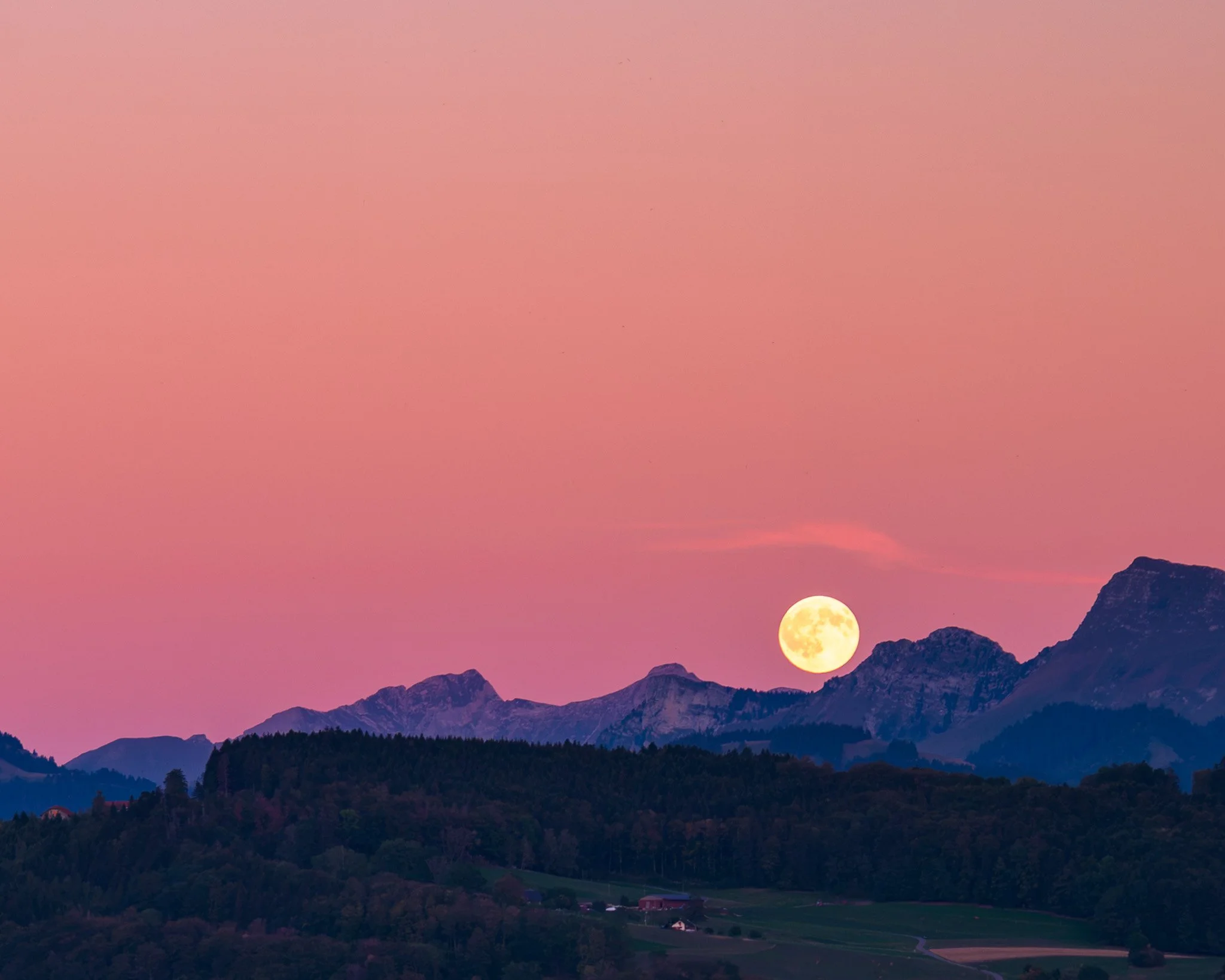
Blowing out the higlights, leavng the moon as a bright white disc with no detail. This is probably the toughest one, but I think I finally cracked it last night.
One of the downsides of living above Lausanne is that it’s difficult to find a clear horizon. If you are down at Lake Geneva, by the time the moon rises it could be too bright for a landscape shot (but might be OK if you are shooting with a telephoto lens) and if you climb up a bit above the lake then your eastern horizon is littered with mountains.
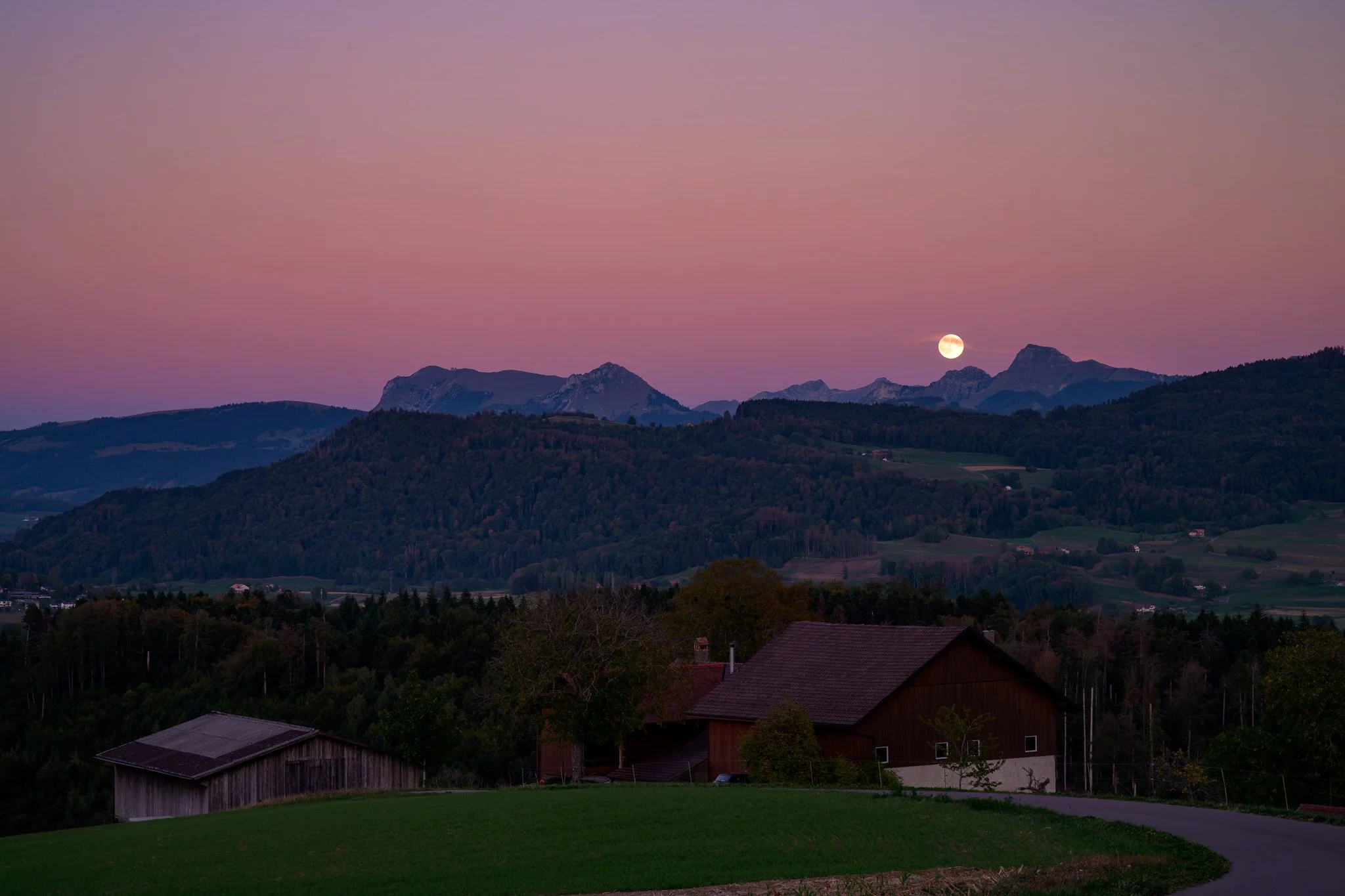
So the trick was to find a composition where I could get the moon rising above some of those mountains. I finally did it with a view from near the Tour de Gourze, which is only a 15 minute drive from my house. The eastern view from the tower itself is obscured by forest, but if you walk back down the road (or in my case all the way down through the forest) you will find some open views east looking towards the Dent de Lys - the first mountains of the pre-Alps on the border between the cantons of Fribourg and Bern.
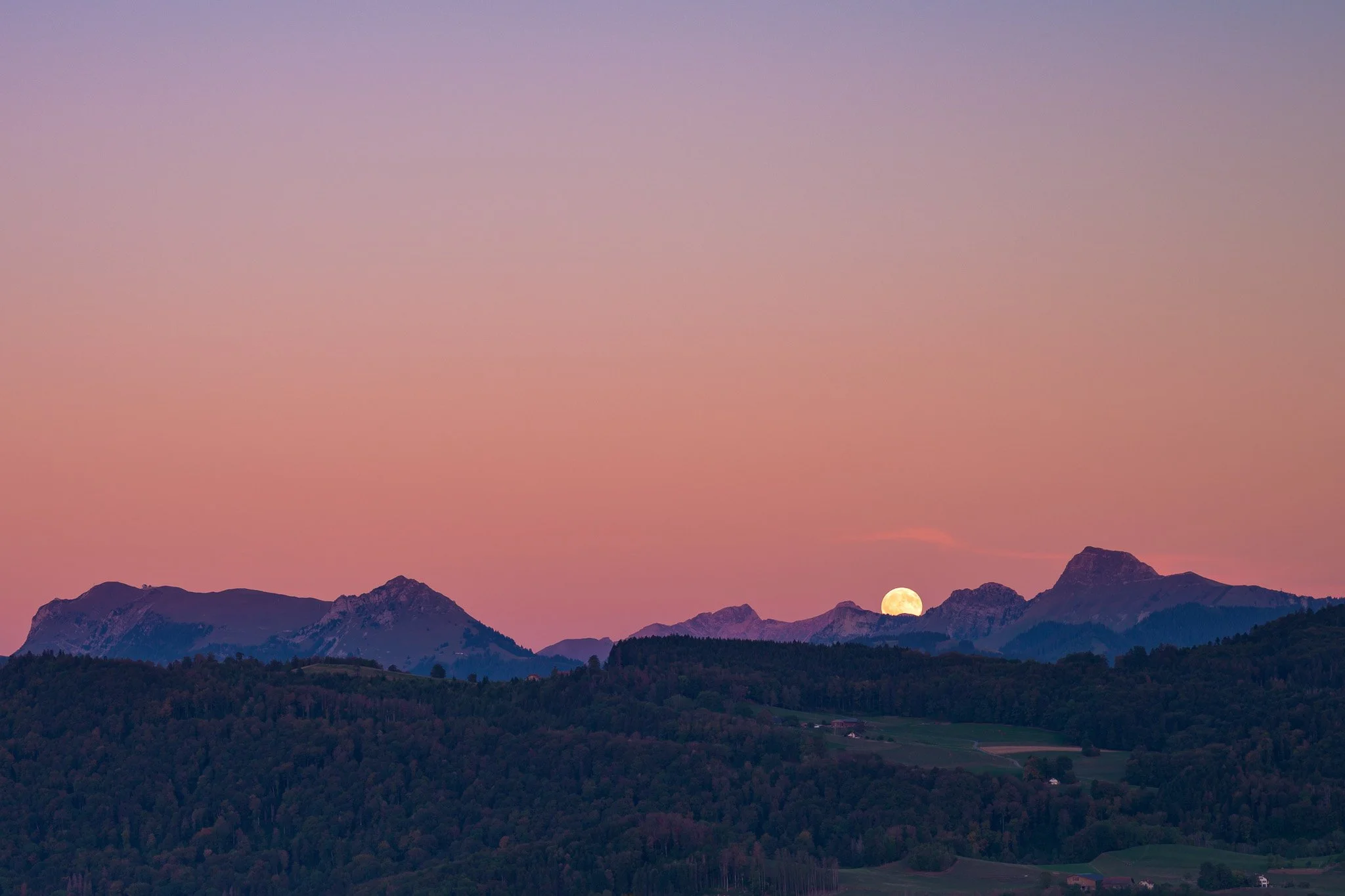
For once I was ahead of my schedule, so I had plenty of time to scout, double and triple-check the exact moonrise location, find a composition and set up. I’d missed a shot the previous day where the moon rose 15 minutes earlier - before sunset - so this was a second chance. After a short wait, where minutes felt like hours, I finally got a glimpse of light just as the moon peeked above the Dent de Lys so I was able to fire off a load of shots.
This was definitely the best time to do it. As soon as the moon got clear of the mountains, the light was too dominant and its surface features were quickly blinded out. Catching the moon as low as possible while there is still some residual sunlight but before it can dominate the sky was the key - especially with no clouds in the sky.
Unlike previous attempts, these shots only needed minimal editing. The mixture of golden and blue-hour colours in the sky is perfectly natural and even the moon itself hardly needed any editing. Apart from some basic edits, I just added a bit of dehaze and noise reduction to improve the contrast. It was the first time I had used the Nisi natural light filter for something other than Milky Way work, so perhaps that made a difference.