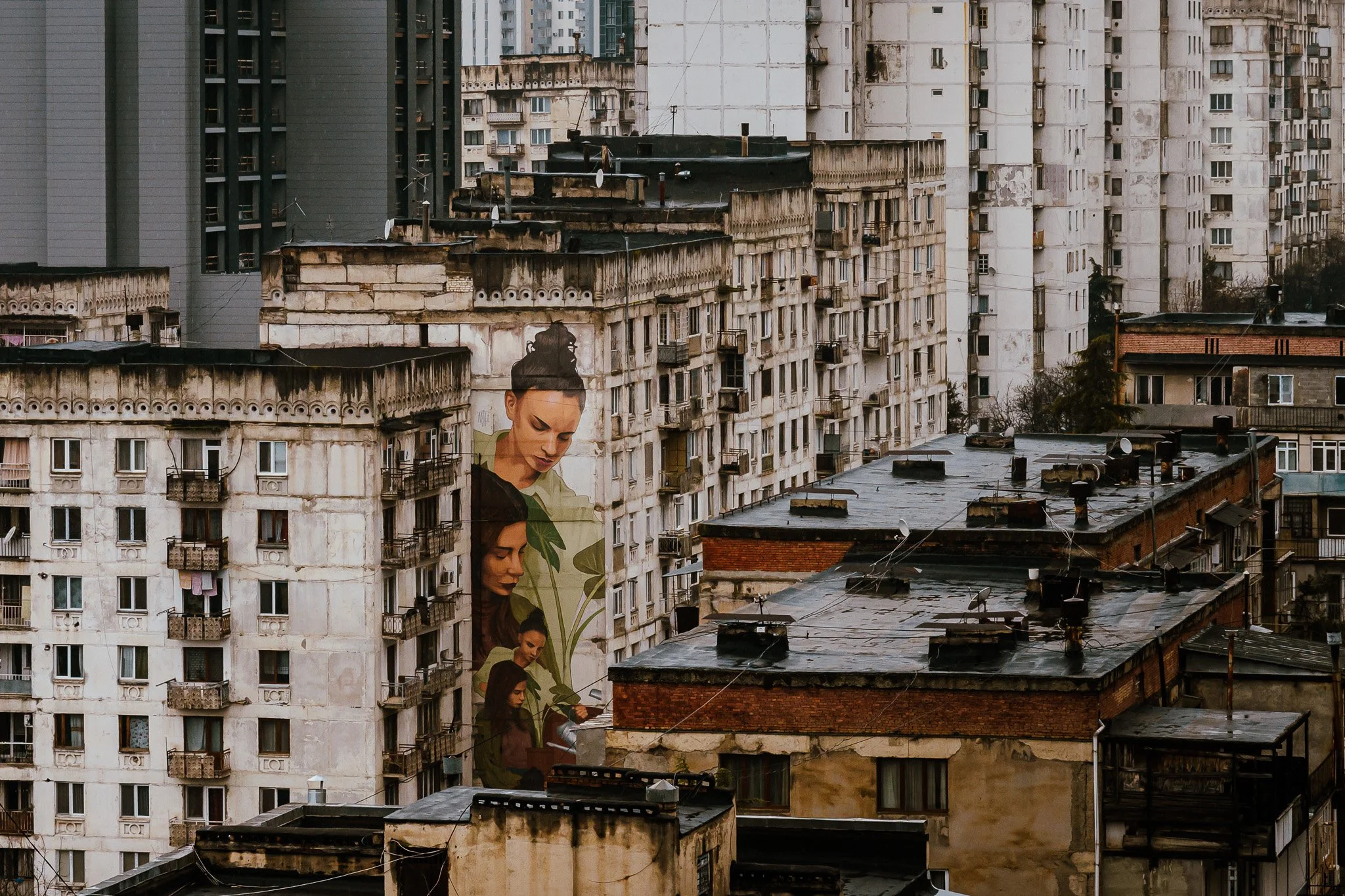
Soviet Tbilisi: A different city hiding in plain sight
Most visitors to Tbilisi come for the old town. The cobblestone lanes, the carved wooden balconies, the domed sulfur baths — these are the images that fill the travel feeds and the guidebooks. They are not wrong, exactly. That part of Tbilisi is genuinely beautiful. But it is also restored, polished and increasingly built around the expectations of the people photographing it. If you want to understand what Tbilisi actually is — the full, contradictory, occasionally brutal sweep of it — you need to go looking for the other city. The one made of concrete.
My Soviet architecture day was the highlight of the trip, and I say that as someone who arrived with high expectations. What I did not anticipate was quite how alone I would be at most of the locations, nor quite how much the guide's knowledge would add to what I was seeing.
The tour
I joined the Urbex and Soviet Tour, bookable via GetYourGuide or directly through friendly.ge. It meets at the fountain outside Avlabari metro station, which is straightforward to find. Although as I was the only person who booked the tour for the day in question, the guide kindly offered to pick me up at the hotel. The tour is by private car with an English-speaking local guide — mine was excellent: deeply knowledgeable about the Soviet period, genuinely enthusiastic, and attuned to the fact that the photographers in the group needed time to compose, not just a moment to point and shoot.
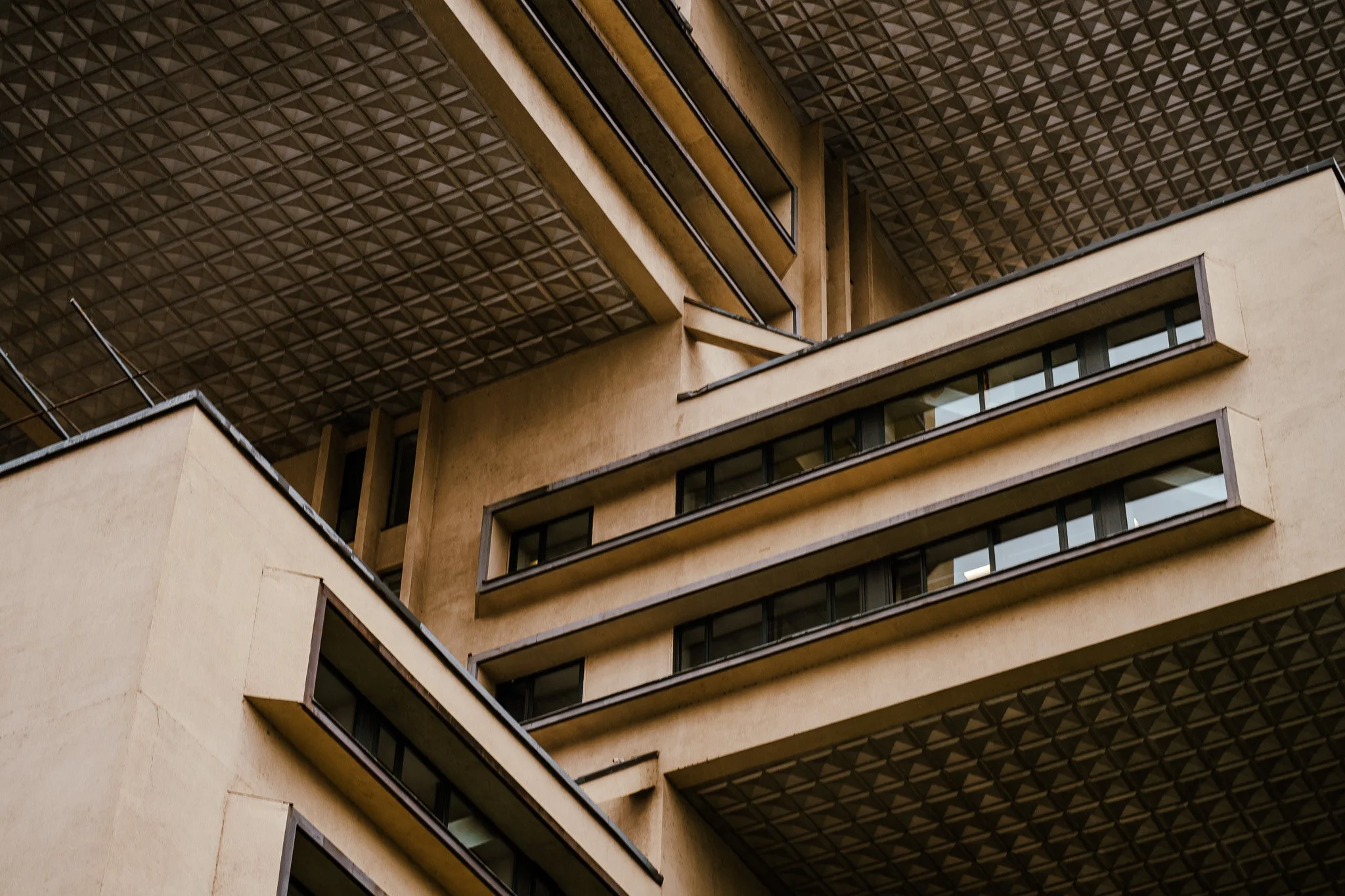
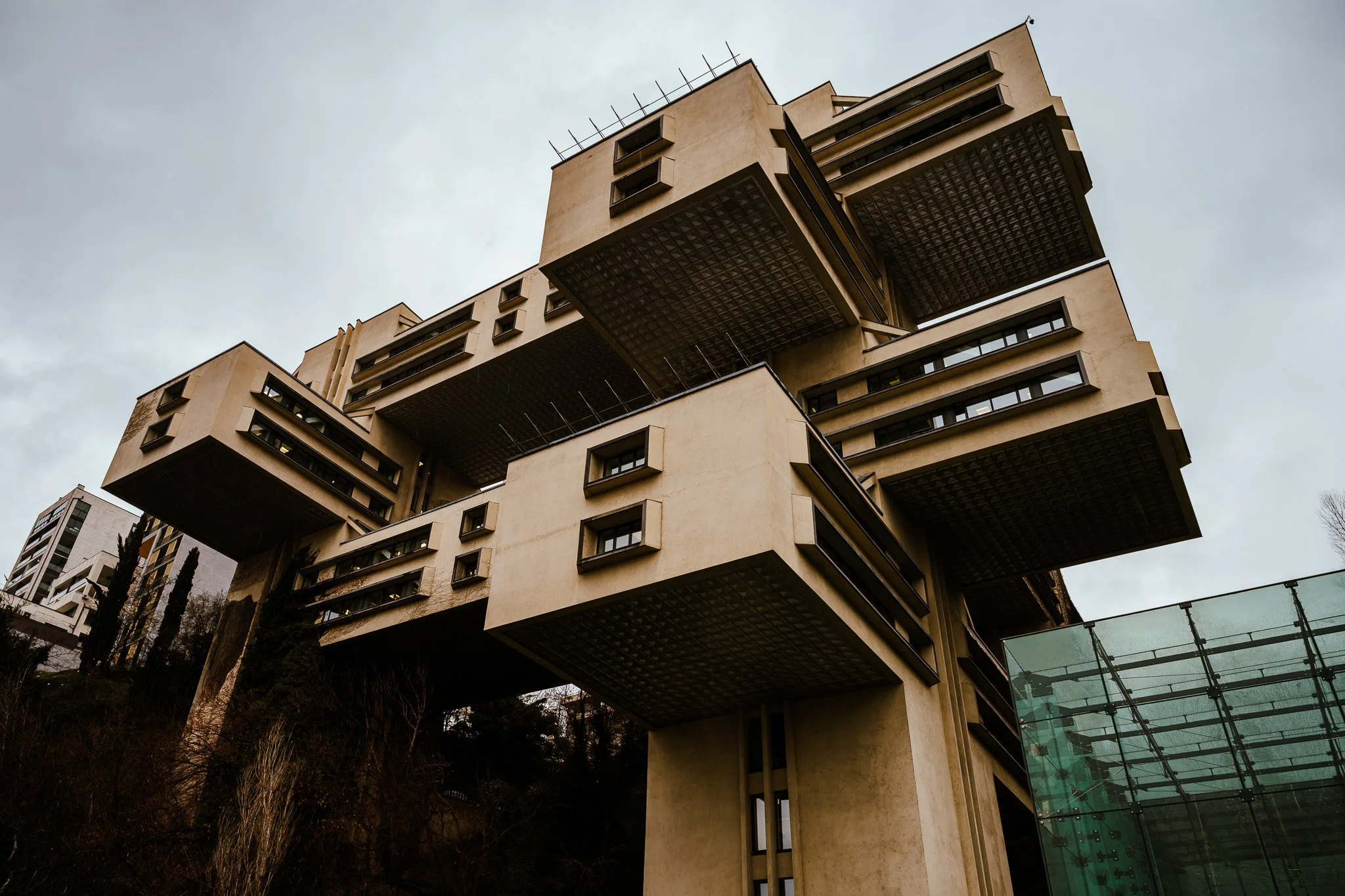
The itinerary covers a range of sites spread across the city, most of which you would struggle to find independently without local knowledge. These include the underground Bolshevik printing press — where the scale of the hidden operation only becomes apparent once you are standing inside it — the exterior of the former Ministry of Roads, a towering piece of Brutalist architecture that still looks like a building from a science-fiction film, the Skybridge towers (more on these below), and the Chronicle of Georgia monument at the edge of the city.
Allow a full half day. Budget roughly $50–80 per person.
The itinerary covers a range of sites spread across the city, most of which you would struggle to find independently without local knowledge. These include the underground Bolshevik printing press — one of the genuinely jaw-dropping stops, where the scale of the hidden operation only becomes apparent once you are standing inside it — the exterior of the former Ministry of Roads, a towering piece of Brutalist architecture that still looks like a building from a science-fiction film, the Skybridge towers (more on these below), and the Chronicles of Georgia monument at the edge of the city.
Allow a full half day. Budget roughly $50–80 per person.
What surprised me
The honesty of it. This is not a sanitised heritage tour. The guide does not present Soviet Tbilisi as quaint or merely photogenic — there is a real history here, involving real people, and it is told with nuance.
The other surprise was the solitude. At virtually every stop — the ministry building, the Skybridge, the peripheral monuments — we were the only people there. Not the only tourists. The only people. This is a city of 1.2 million and these extraordinary structures stand largely unvisited. For a photographer, that kind of access — unhurried, uncontested, with space to move around a subject and wait for the light — is rare.
The Chronicles of Georgia
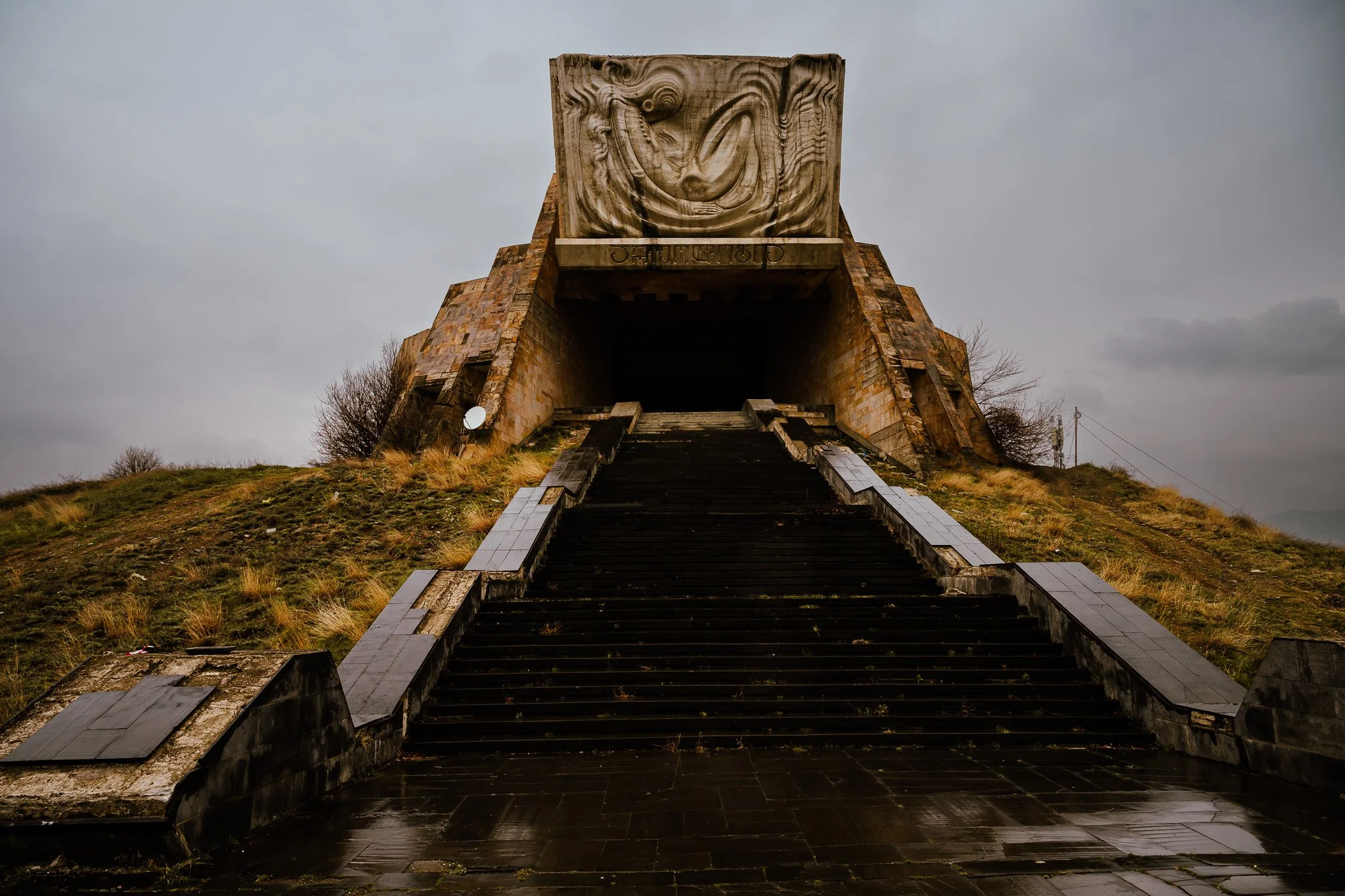
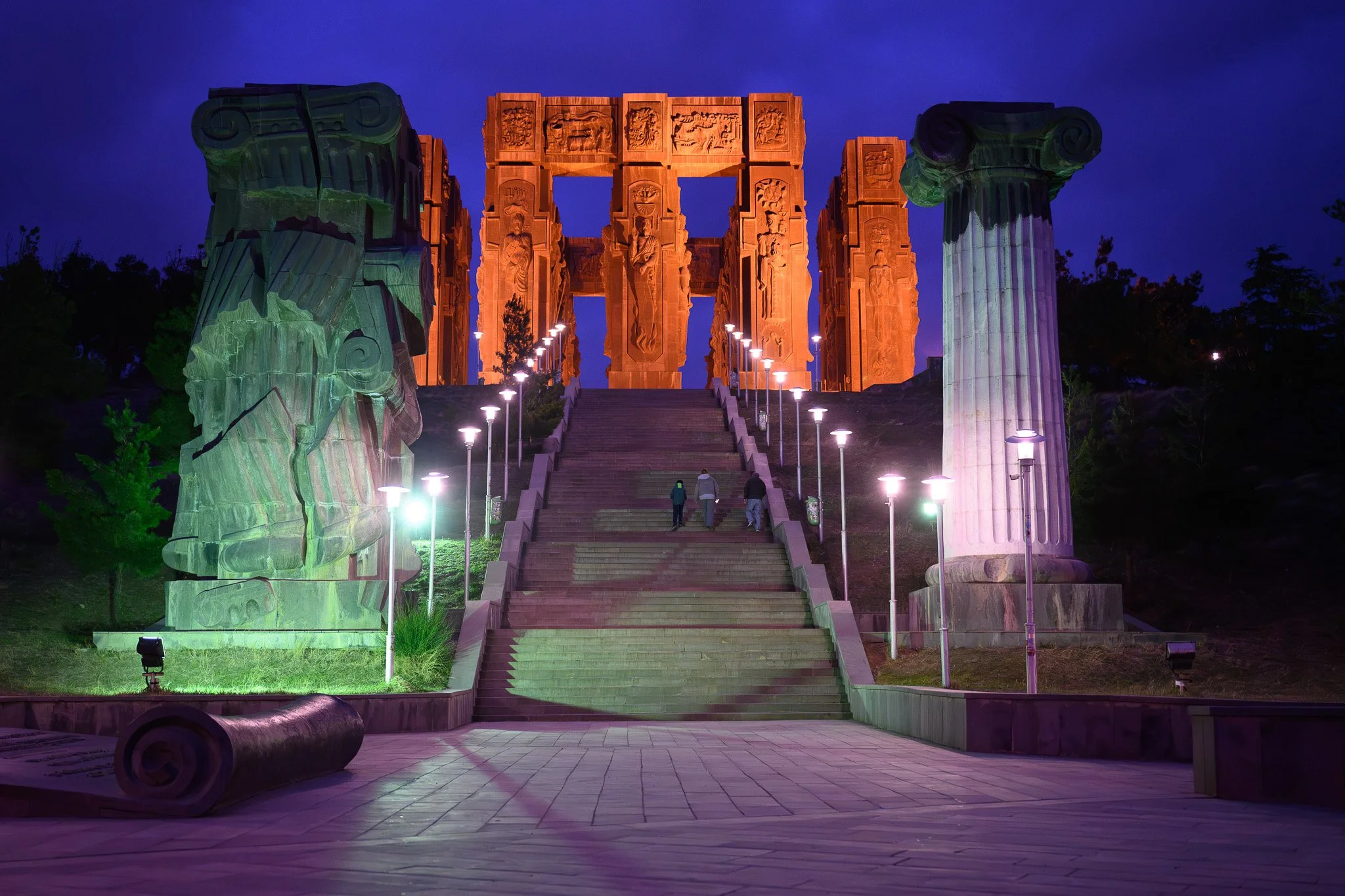
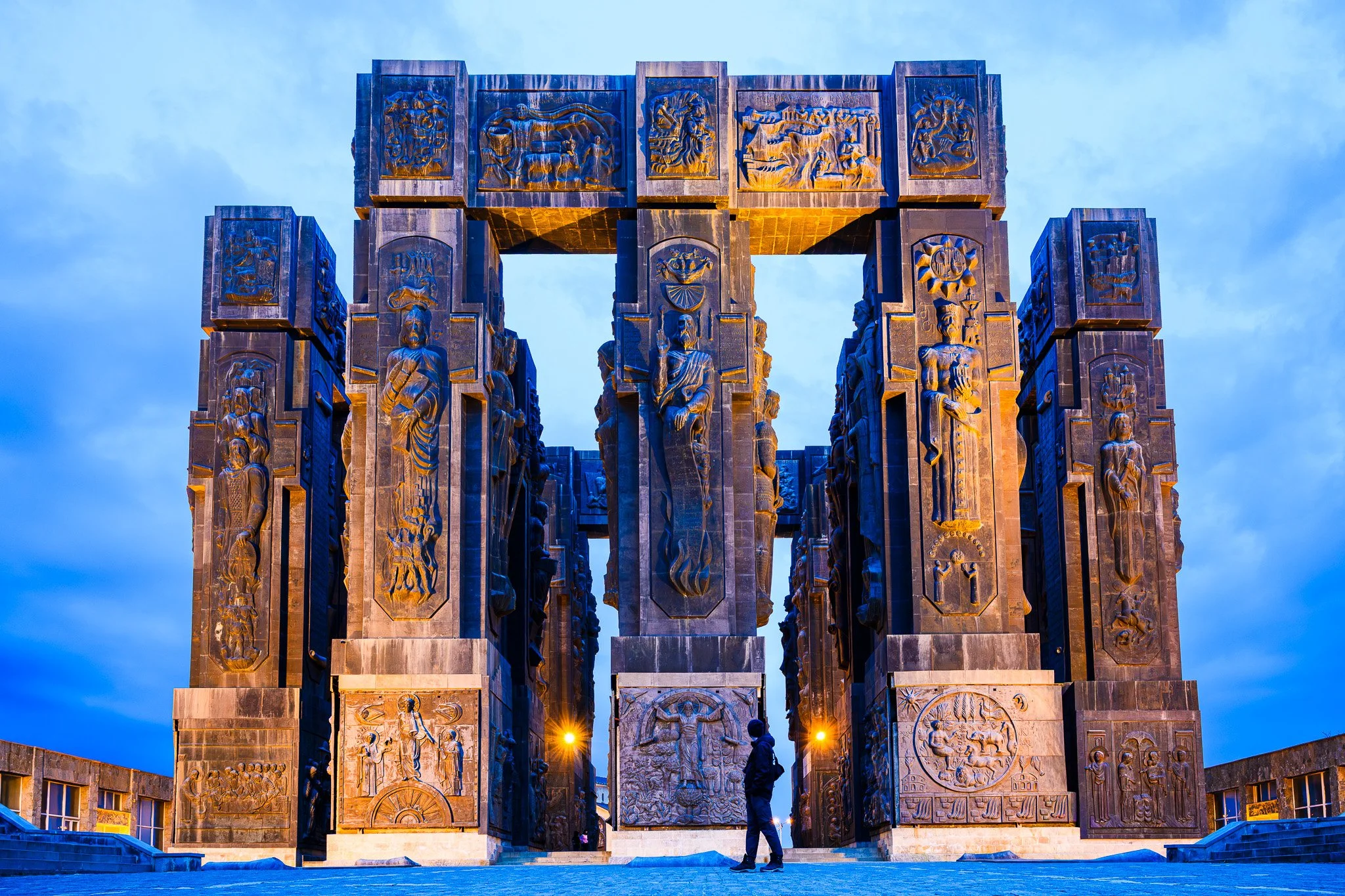
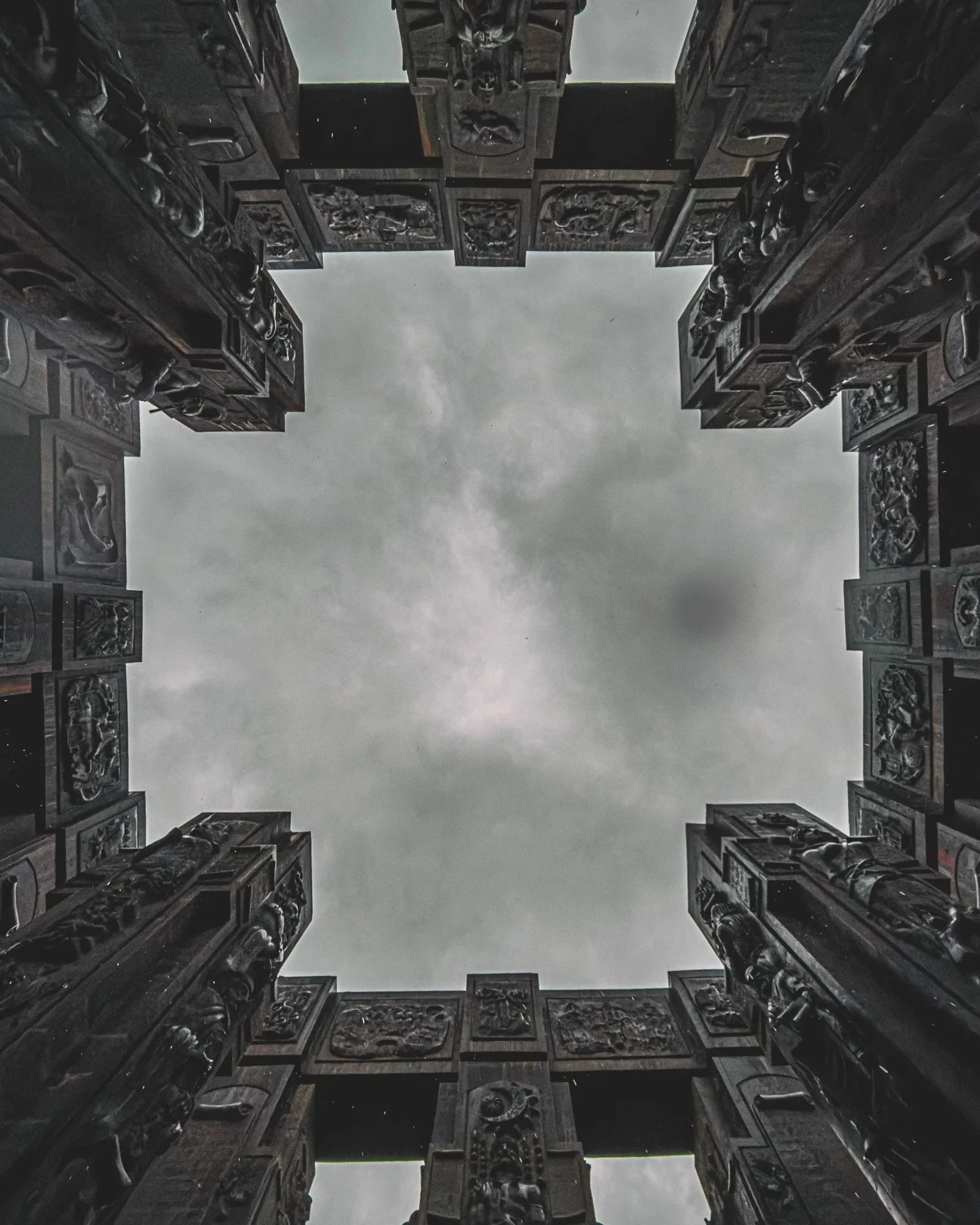
The one exception to that solitude was the Chronicles of Georgia and it is worth addressing directly because it changes the nature of the shoot. This is a monumental complex of 16 columns, each 35 metres high, carved with scenes from Georgian history and Orthodox Christianity. It is extraordinary. It is also, by some distance, the most visited site on the tour.
At the Chronicles, you will share the space with other visitors — a mix of Georgian families, tour groups, and other international travellers. The monument is open 24 hours and sits above the Tbilisi Sea reservoir with sweeping panoramic views. None of this diminishes its power as a photographic subject, but it does require a different approach. The standard reaction shots of people standing before the columns can be very good. So can tight abstract details of the carved stonework. But if you want the place to yourself, arrive at dusk when the day-trippers are thinning out, or return very early the following morning. In this case if you have a tripod, try some long exposures to remove any people in a completely natural way. I visited the Chronicles a second time independently of the tour to get the golden and blue-hour shots.
Suggested settings at the Chronicle of Georgia:
At golden hour, work around ISO 200, f/8, and expose for the stone rather than the sky — the sky will look after itself. For blue hour and night work, drop to ISO 400–800 and let your shutter run long: 4–20 seconds depending on your desired movement in the water below. A tripod is essential for the latter.
The Nutsubidze Skybridge
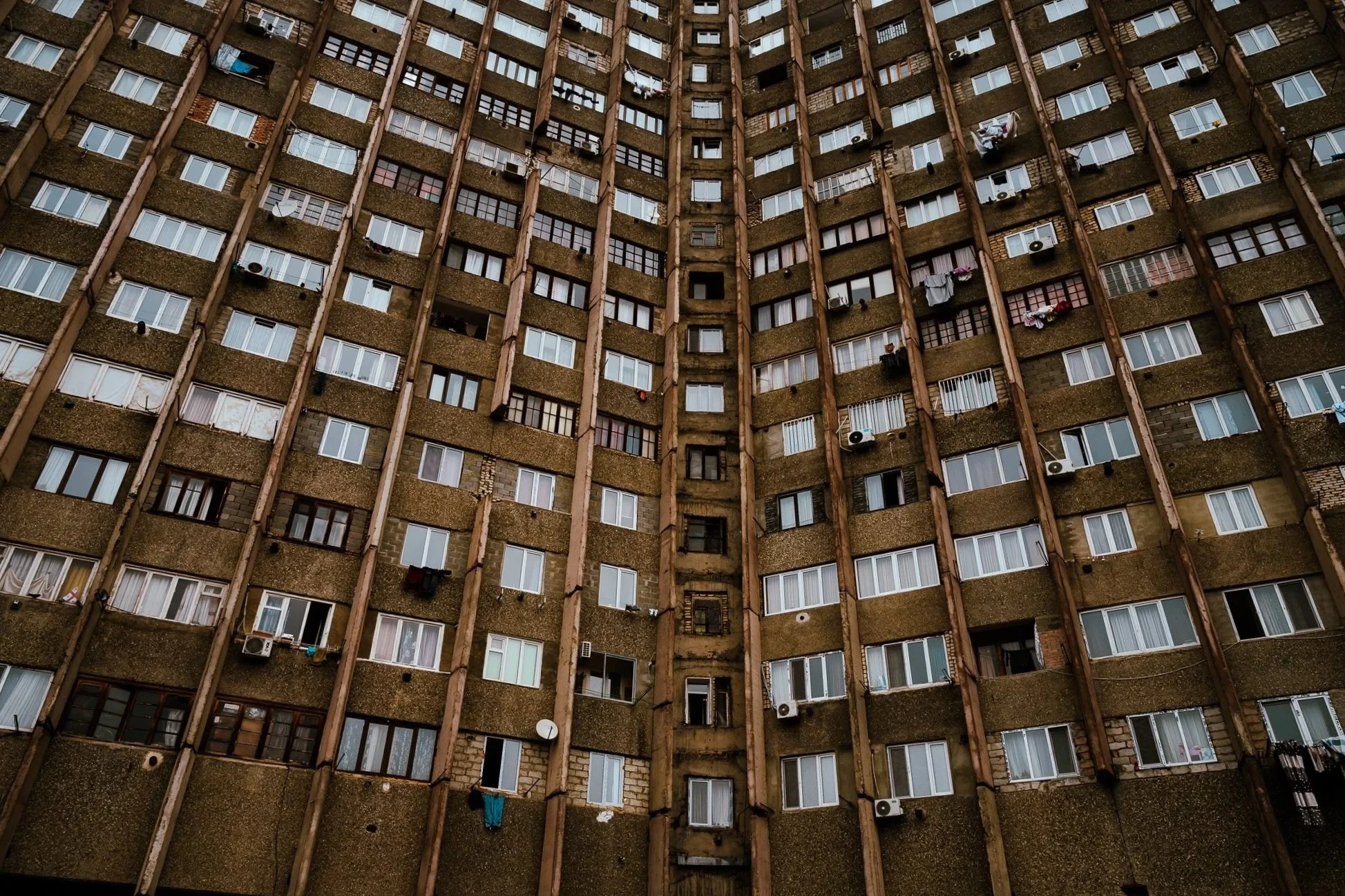
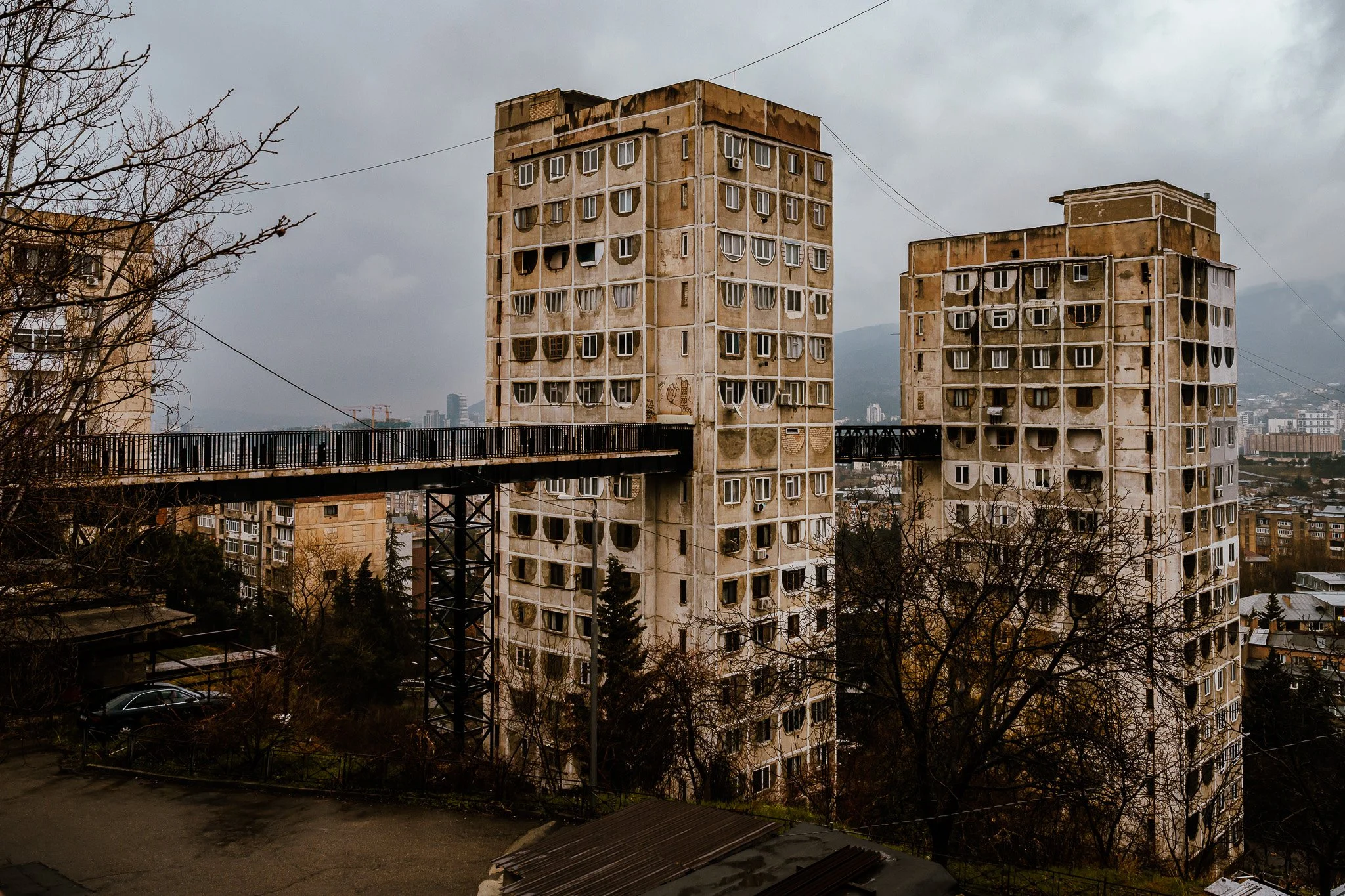
The Skybridge towers deserve their own mention, because they are unlike anything else in the city. Three identical 16-storey Soviet apartment blocks, built for employees of a research institute in the 1970s and 1980s, connected to one another by aerial walkways. From street level they are imposing; from the bridge walkway itself, the scale of the surrounding city opens up in a way that catches you off guard.
The guide may well include the Skybridge as part of the main tour. If so, go back independently in the evening. The towers at golden hour, with long shadows thrown through the connecting walkways and the mountain backdrop catching the last light, are worth the return trip. After dark, long exposures from street level — with the lit windows of the towers reflected in whatever wet ground you can find — produce something genuinely atmospheric.
A small, practical detail: there is a lift operator who lives in a tiny room next to the public lift. There used to be several operators working in shifts but now the lady does this all on her own and has essentially made her office her home, complete with a washing machine in the corridor. You have to pay to use the lift and the hint that other intrepid tourists have come before you comes in the form of English notices and the modern touch of a WhatsApp number if you need to contact the operator. I was lucky because the lift had only recently reopened after some maintenance, which required sending technicians from Turkey.
Why it matters
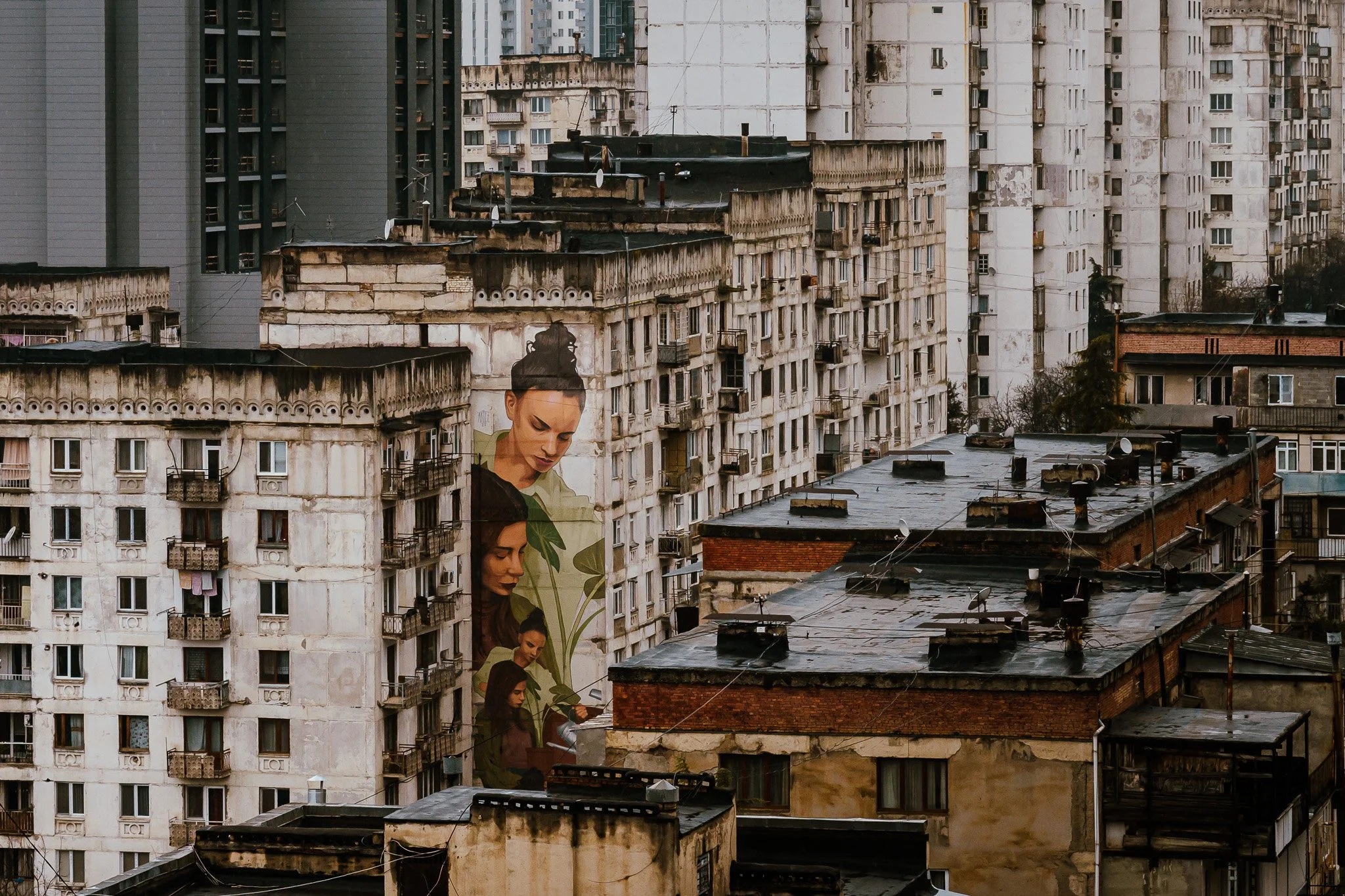
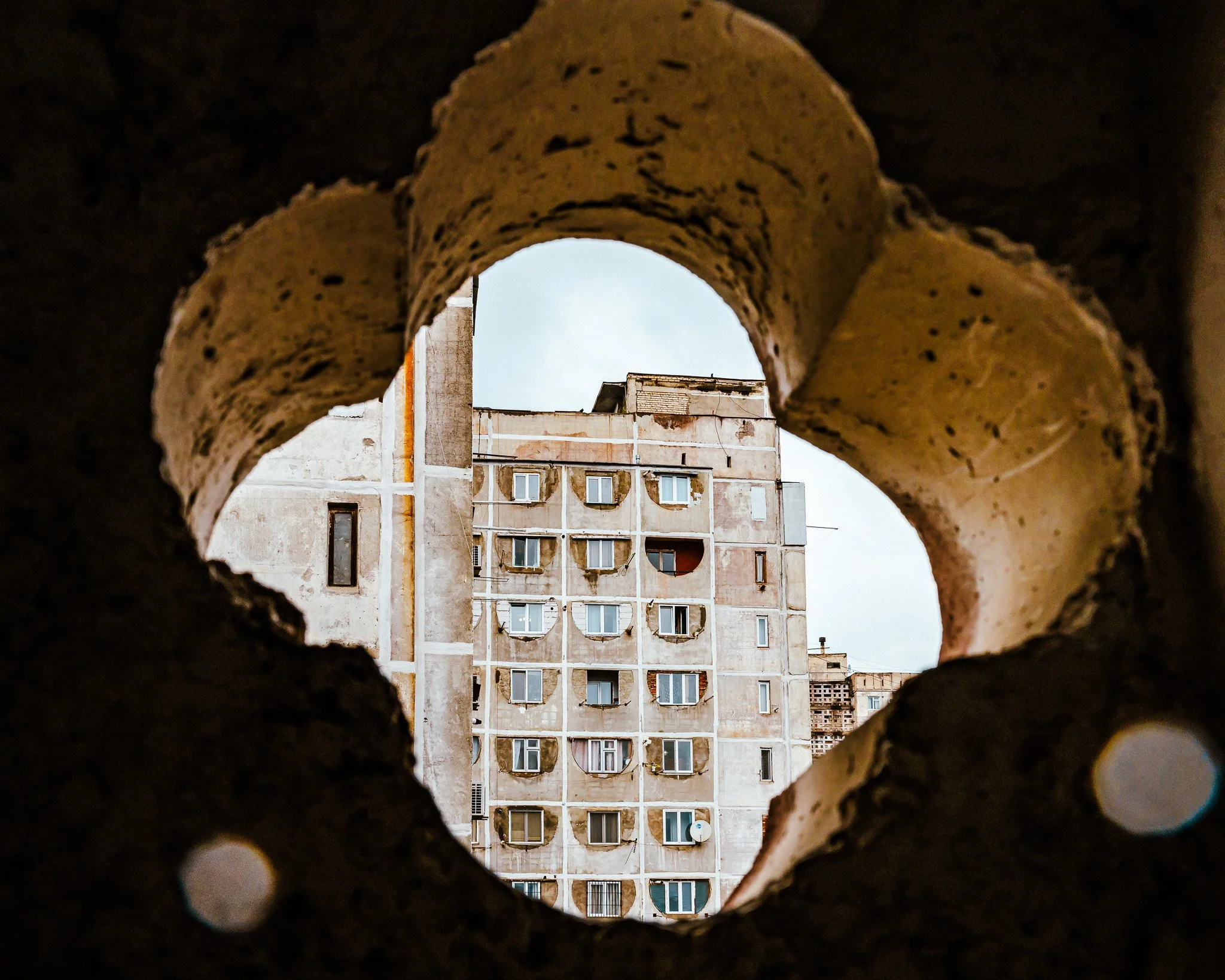
There is a tendency in travel photography to seek out the exotic or the beautiful, and to treat the ugly or the difficult as a backdrop rather than a subject. Soviet Tbilisi resists that tendency. The buildings are not picturesque in any conventional sense, yet on closer inspection at the Skybridge complex you can see inverted horseshoe shapes surrounding the balconies, which are a symbol of good luck, as well as decorative openings in the facade. The histories attached to them, however, are complicated. But that is precisely what makes photographing them worthwhile — and what makes this particular side to the city, with its crumbling concrete and its extraordinary human stories, worth your time.
You will come back with images that look nothing like anyone else's photographs of Tbilisi. That, in itself, seems reason enough.
Related articles:
— Tbilisi: A photographer's guide to Georgia's extraordinary capital
— Early mornings in Tbilisi: Markets, bus stations and honest expectations
— Golden hour and beyond: Modern Tbilisi and the classic shots