Trying a ChatGPT photo challenge
I’m lucky enough to live on the doorstep of a UNESCO World Heritage Site (the terraced vineyards of Lavaux) and just a stone’s throw from sweeping views across Lake Geneva and to the French and Swiss Alps beyond.
Whilst this is a dream for a landscape photographer, it’s also easy for me to fall into the same trap - always shooting the same wide angle shots of the same area. On a recent afternoon with glorious sunny weather I couldn’t pick from several destinations to try to shoot something a bit different, so I asked ChatGPT for help. Here’s the prompt I used
Select a random location in the canton of Vaud for me to explore and photograph this afternoon. As an experienced photographer, I specialize in landscapes, so please choose a spot that offers visually interesting scenes. Note that I will not be shooting during the golden hour, so consider locations that provide great photographic opportunities throughout the day. Make sure to include any relevant details about the landscape features, accessibility, and any must-see spots within the area.
With its usual confidence and authority, ChatGPT very quickly pointed me in the direction of a viewpoint just before Chardonne in the very heart of those Lavaux vineyards.
Never one to leave it there, ChatGPT followed up with:
If you want, I can also give you:
a “bad weather” Vaud photography destination,
a more wild/alpine alternative,
or a highly specific photo challenge for Lavaux to make the outing creatively harder.
So I opted for the specific photo challenge and here’s what it gave me. I think it’s a great way to challenge yourself and look for compositions that you wouldn’t normally think of. Just the fact of having a brief that forces me to think in a particular direction made a big difference for me. I’m posting the photos under each category so you can judge how well I did.
Challenge: Create a cohesive 9-image series with these exact constraints:
Only shoot between 35mm and 70mm
No ultra-wide establishing shots
No cropping afterward beyond minor straightening
Every image must contain at least 3 distinct depth planes
No people as primary subjects
The lake must appear in at least 6 images
Shoot the entire series handheld
The goal is to make Lavaux feel immersive rather than panoramic.
The 9 Required Frames
1. “The Barrier”
Use:
a vine row,
railing,
wall,
or staircase
to partially obstruct the view.
You want tension between blocked foreground and open landscape.
The result:
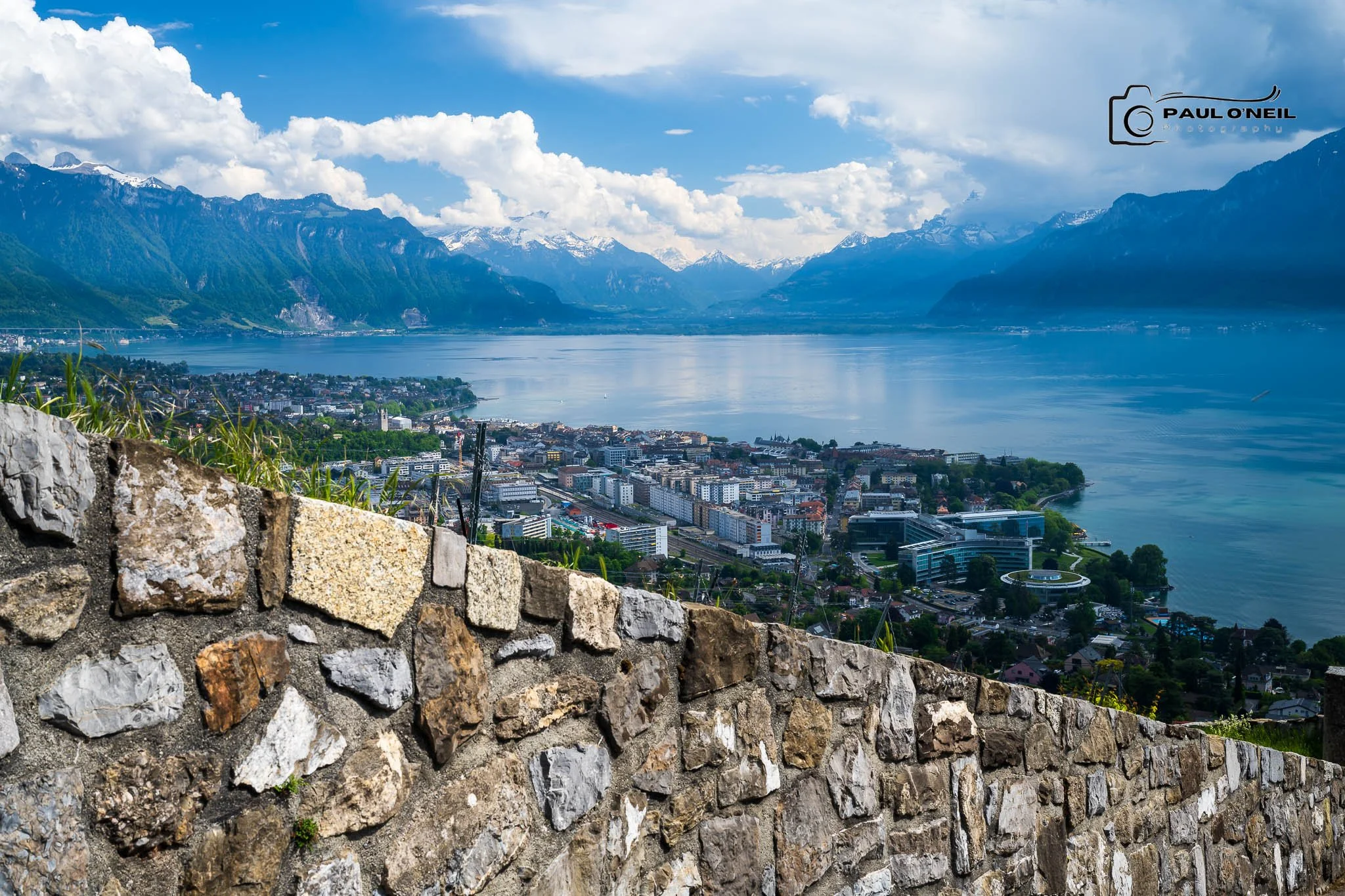
The stone wall of the terraced vineyard creates the tension in the view down to Vevey (with the Nestlé headquarters visible), across the lake to the mountains beyond.
2. “Three Blues”
Capture:
sky,
lake,
mountains
as three distinct tonal blues.
The result:
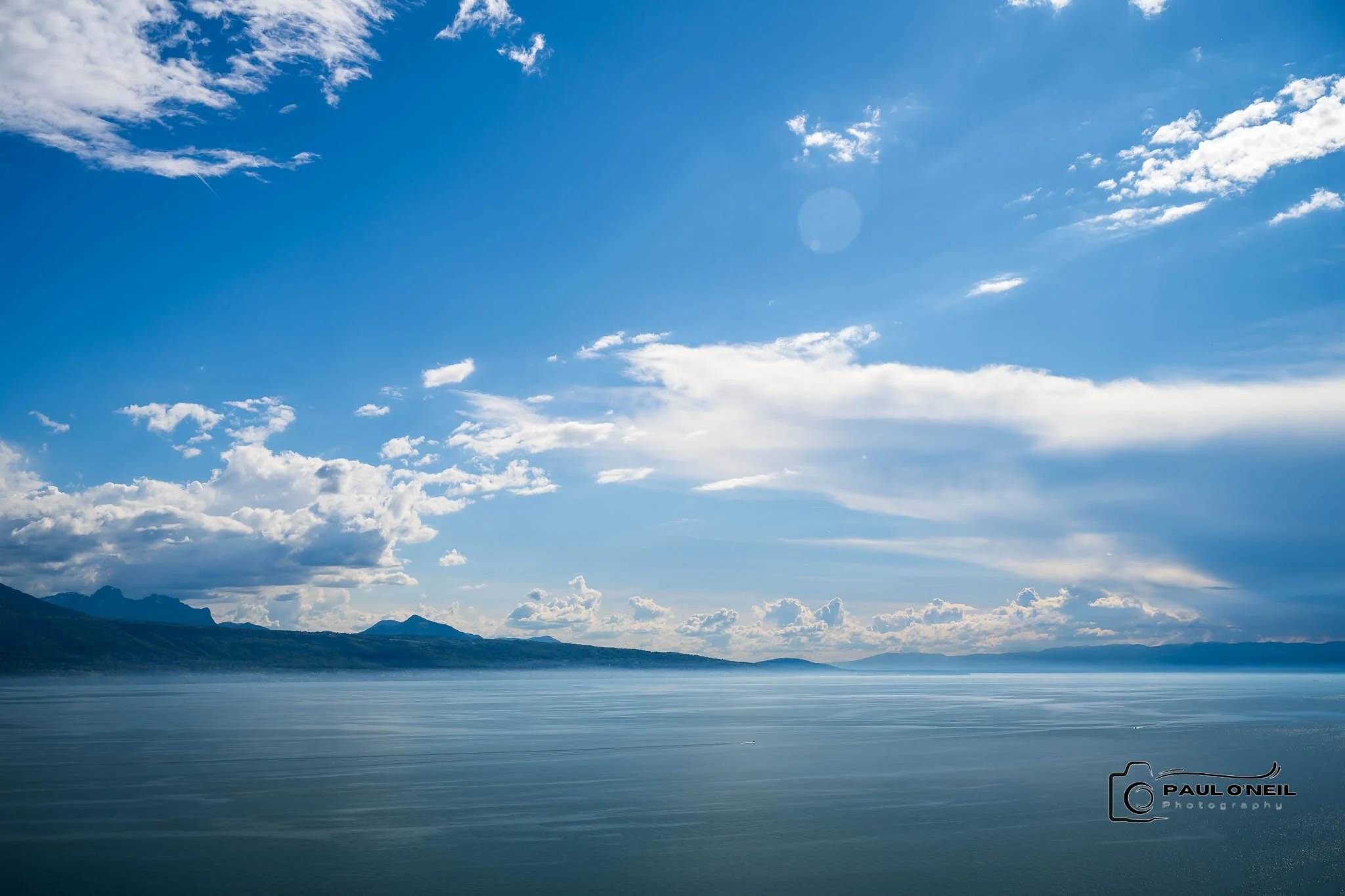
An image where blues dominate, from the stippled surface of the lake to the outlines of the mountains and a bright blue mid-afternoon sky.
3. “The Impossible Horizon”
Create a frame where the vineyard slope makes the lake horizon feel visually wrong or tilted.
Use diagonal terraces aggressively.
The result: This was my least favourite image from the entire shoot. This was the challenge I found most difficult to interpret. How do you do this without making the image look ridiculous? As a landscape photographer I am meticulous about having the horizon straight, so this just felt totally counter-intuitive.
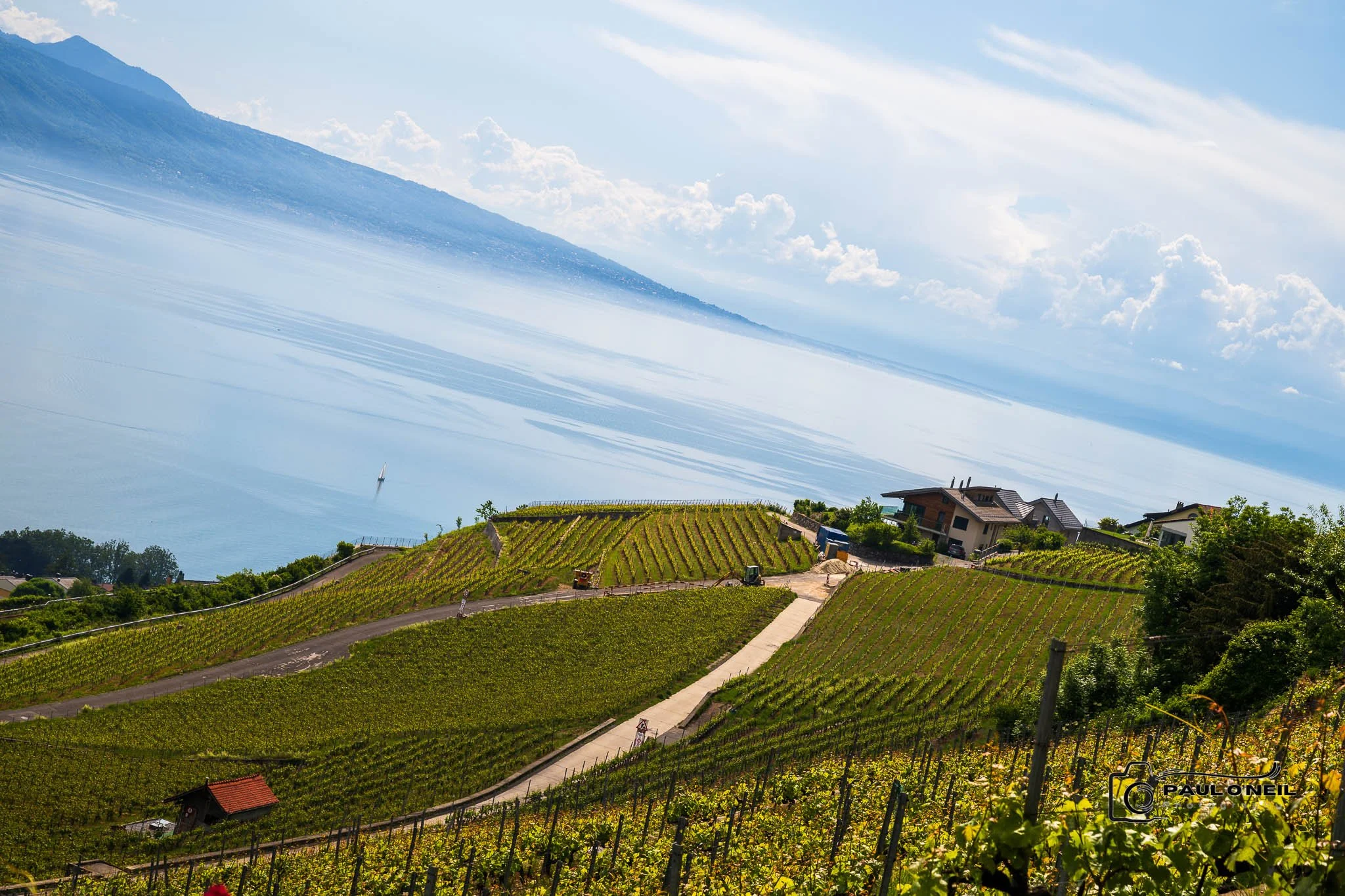
A distorted horizon looking across Lake Geneva.
4. “Human Absence”
Photograph evidence of humans without showing any people:
tools,
rails,
tractors,
wine crates,
chairs,
tracks,
utility lines.
The result:
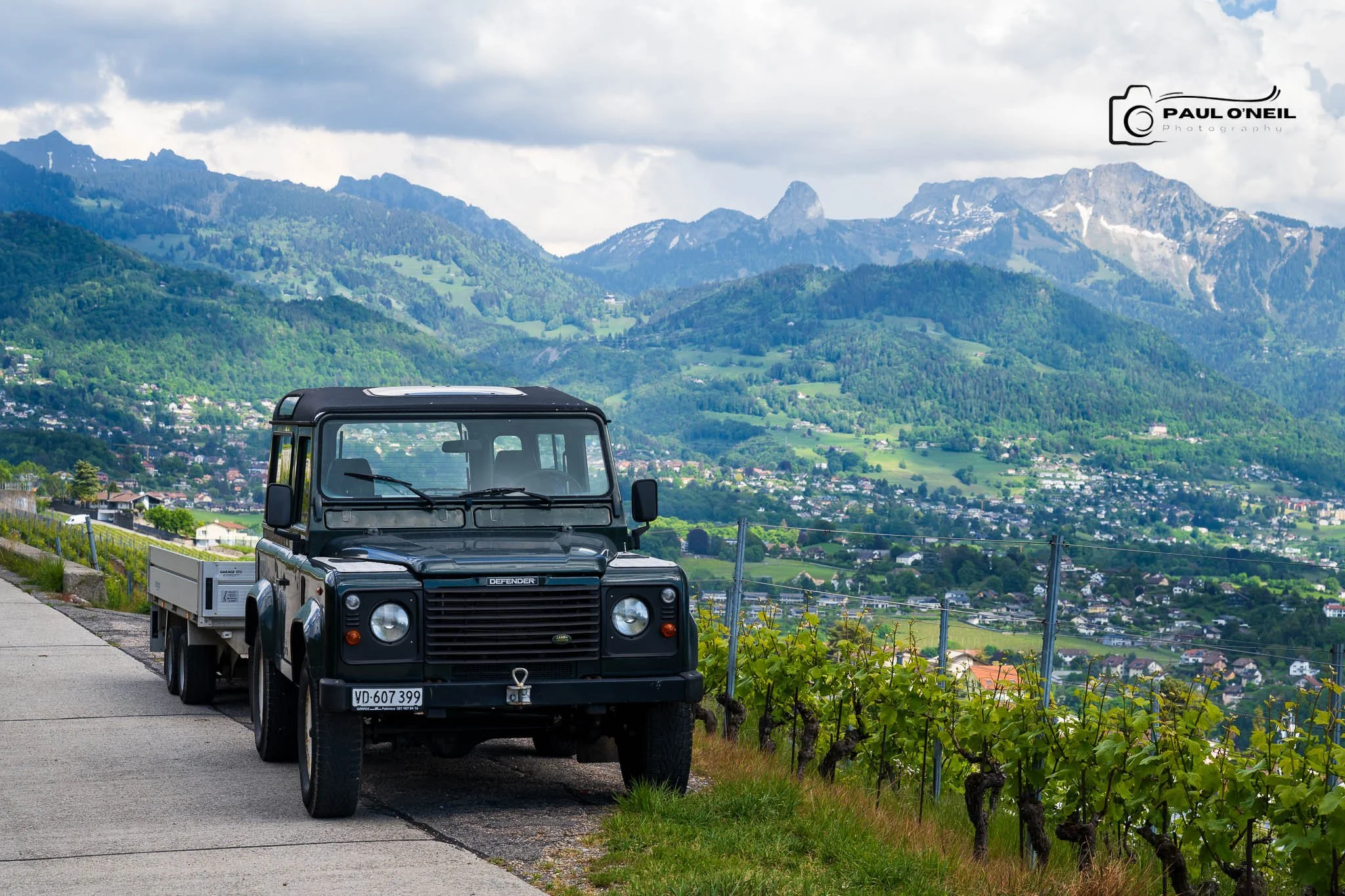
The Land Rover Defender as the ultimate utility vehicle. It had been used to transport some machinery that was working loudly in the vineyards in the background.
5. “Layer Collapse”
Find a composition where:
foreground vines,
middle villages,
and distant Alps
appear visually flattened despite only having 70mm.
6. “One Colour Dominates”
Create a frame where one color occupies roughly 70–80% of the image:
deep green vines,
pale blue haze,
grey stone,
silver lake reflections.
Minimalism over spectacle.
The result:
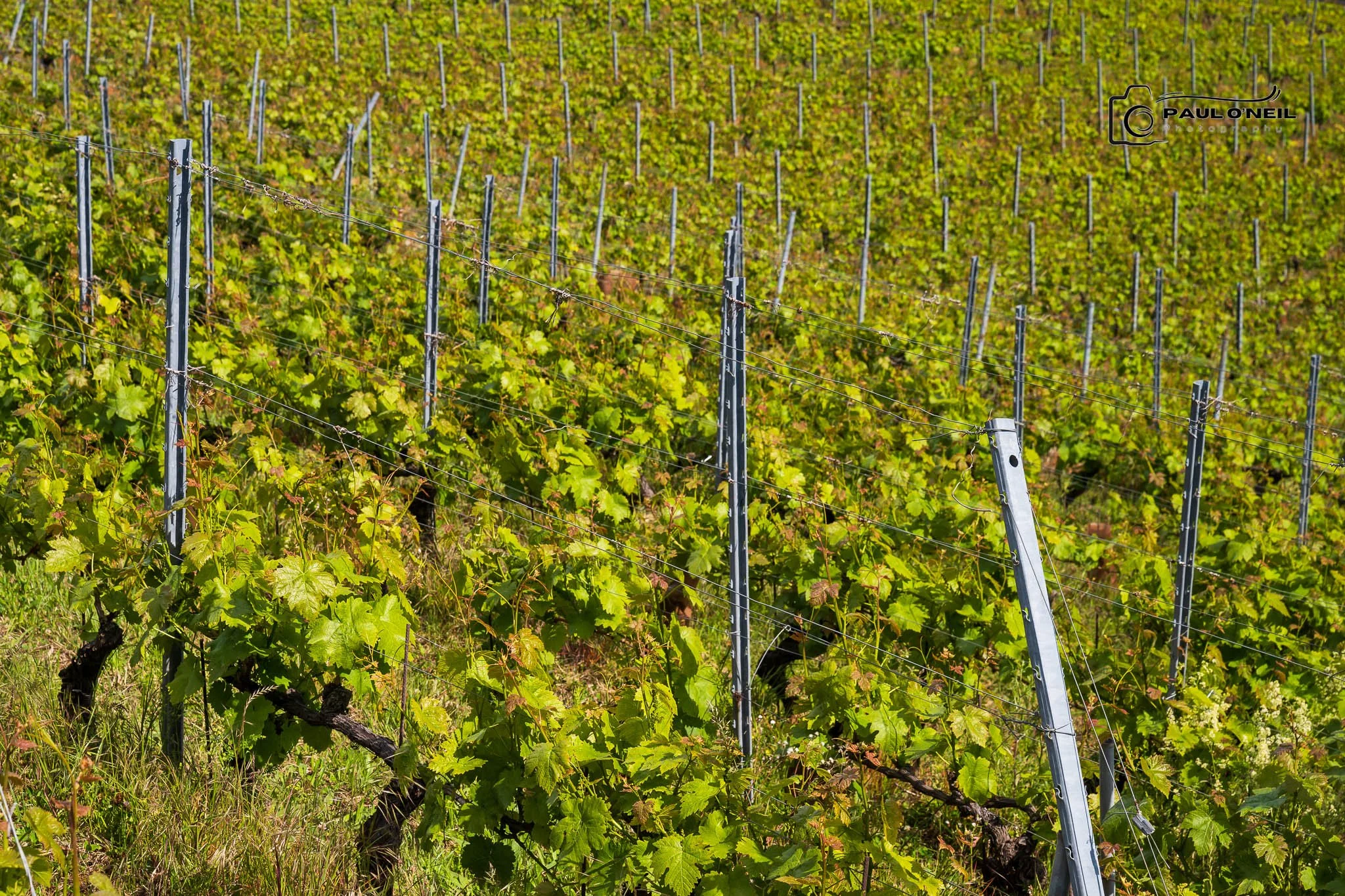
A relatively easy shot with the vines in leave and the spring grass growing around the roots.
7. “The Quiet Geometry”
No dramatic scenery.
Only:
repeating vine posts,
terrace curves,
shadows,
stone textures.
Almost abstract.
The result:
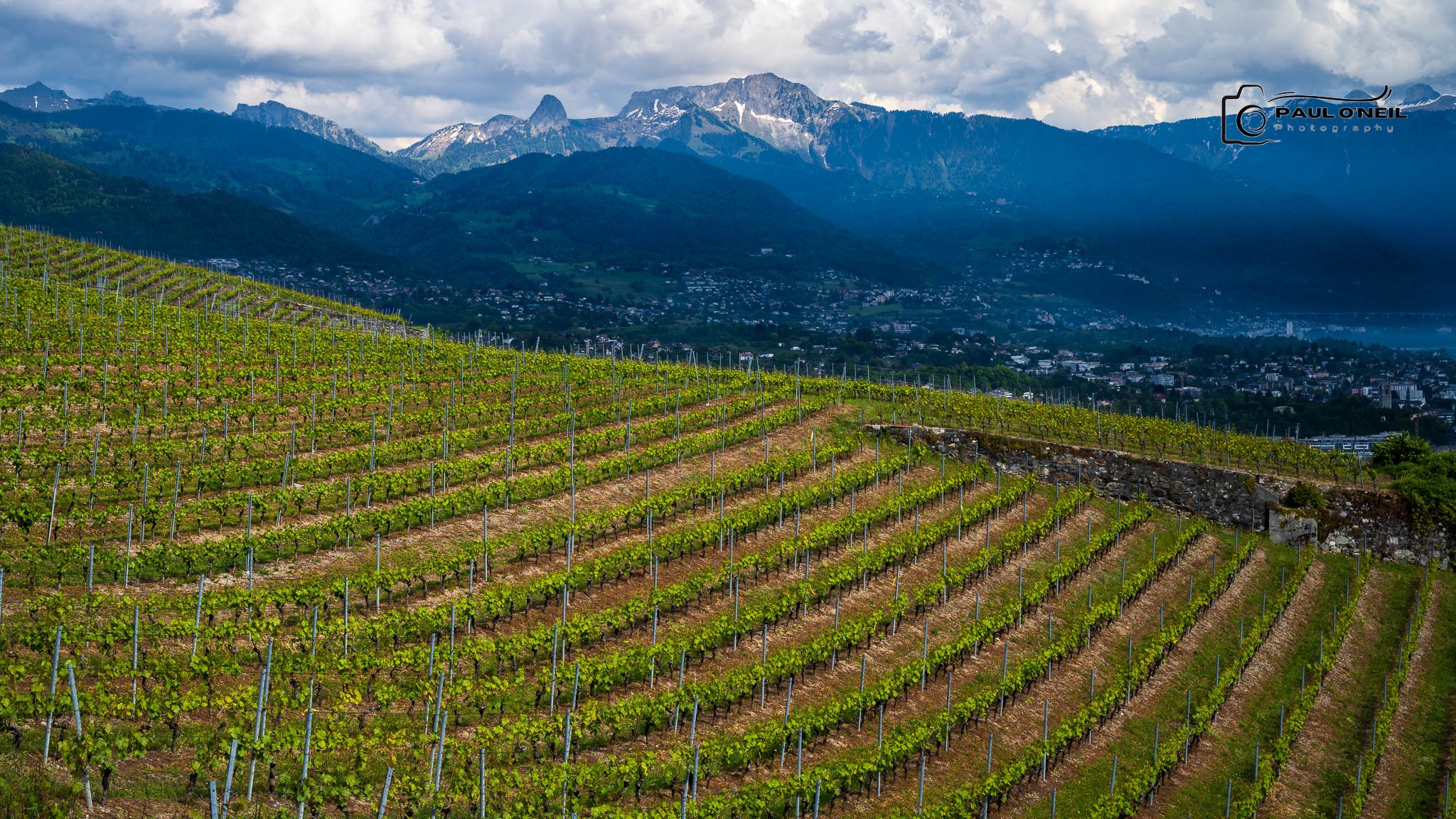
Emphasising the diagonal lines of the vineyards against the backdrop of the Vaud pre-alps.
8. “The Hidden Lake”
The lake cannot dominate the image.
Instead:
reveal only fragments of it through vines, buildings, or gaps.
Make viewers discover it slowly.
The result: Pushed a bit to the extreme but the shot was begging to be taken.
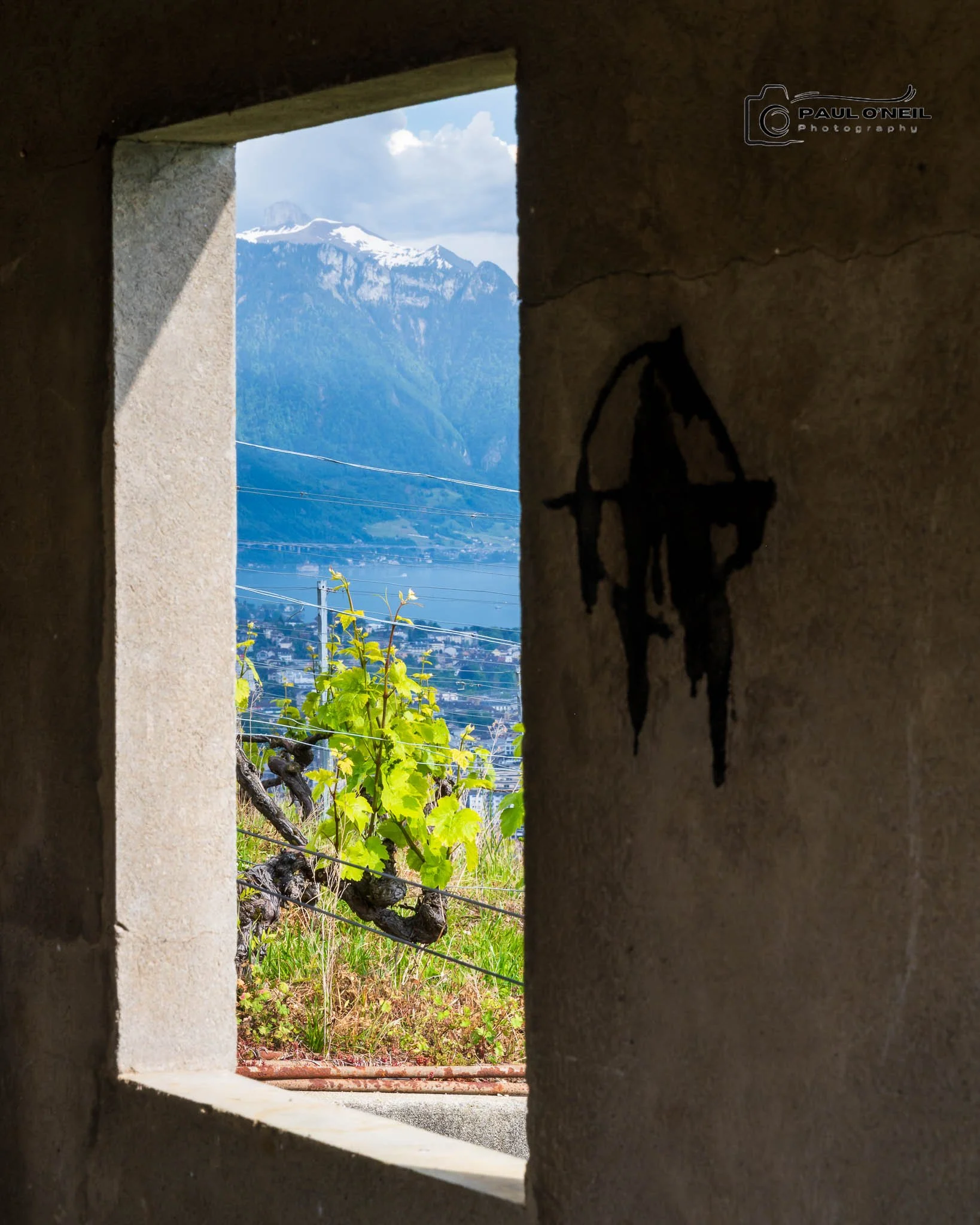
The vines and the lake revealed through an opening in a small hut set in the vineyards.
9. “The Final Frame”
End the series with the strongest sense of atmosphere, not the grandest view.
Look for:
haze,
distant rain,
reflective pavement,
wind in vines,
low clouds over the French Alps.
Mood beats spectacle.
The result: The shot I didn’t think I would get on a bright sunny afternoon. Suddenly there was a gathering of haze and - yes - distant rain approaching across the lake. Shortly after the shot was taken there was a brief shower.
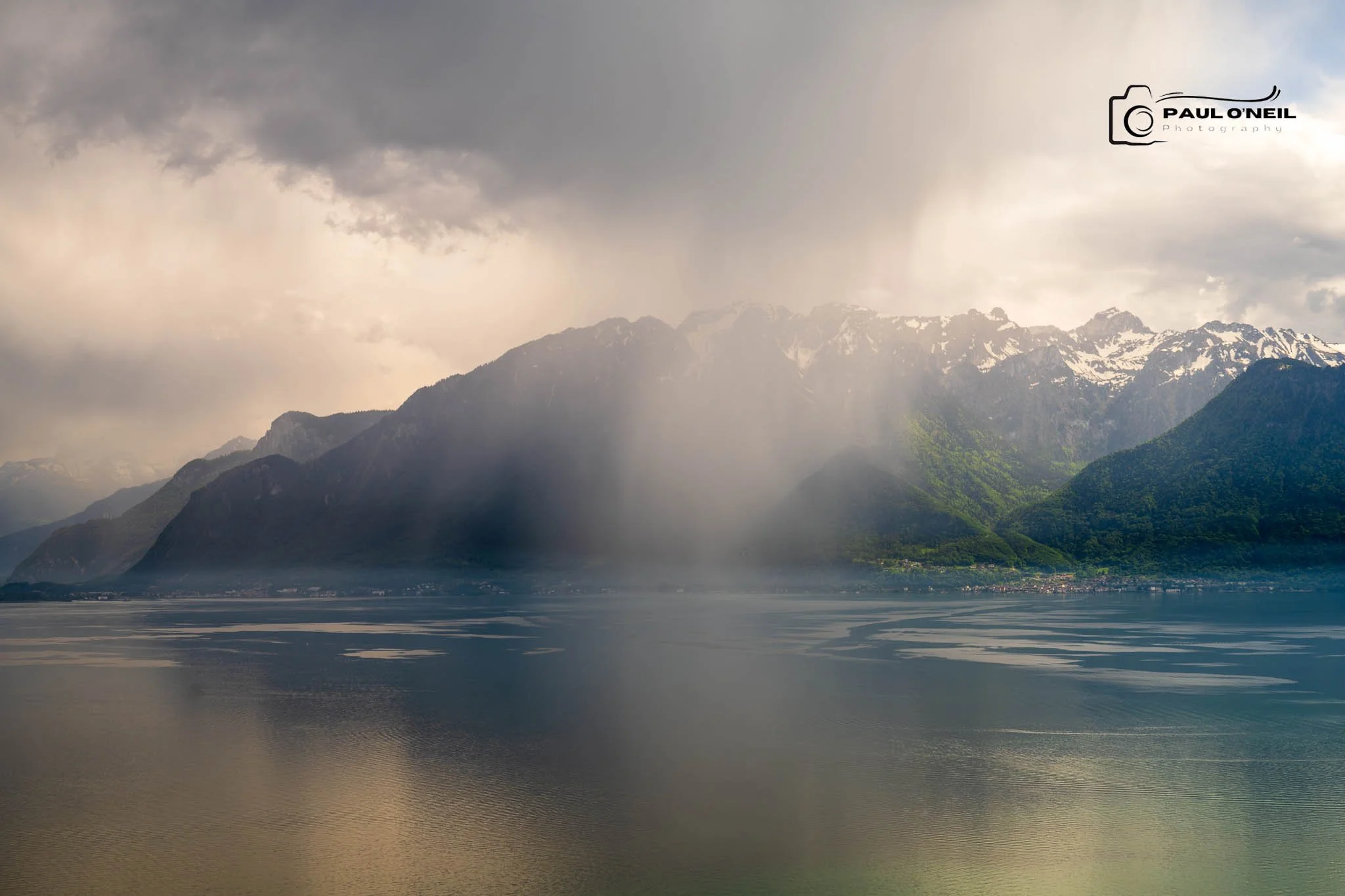
The haze of a short shower approaching across the lake.
Extra Difficulty Mode
For the whole outing:
avoid standing still more than two minutes in one spot
shoot fewer than 80 total frames
no checking images for the first 30 minutes
I managed to respect this, although I might have looked at a couple of images in those first 30 minutes. But otherwise I kept moving and shot well under the 80 total frames. As suggested by ChatGPT, it did indeed force stronger instinctive compositions.
